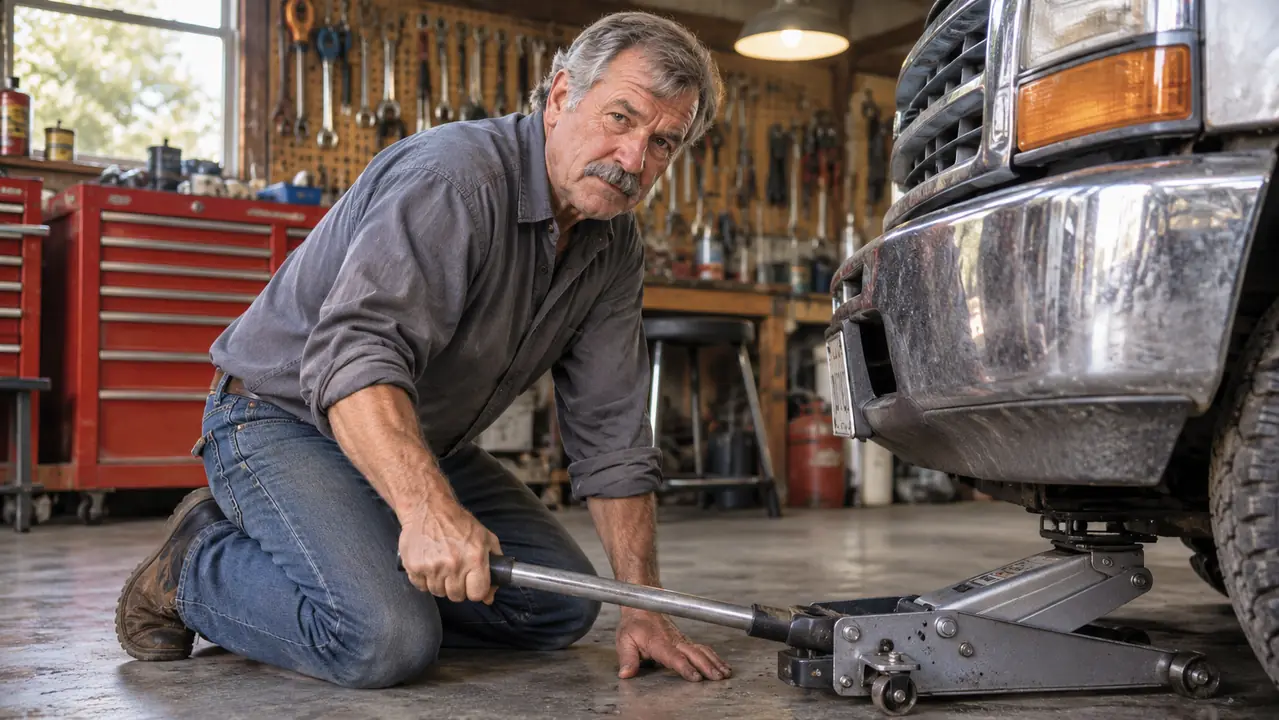
If you have ever dropped a factory scissor jack in a wet driveway and watched your car settle onto a chunk of 2x4, you already know why I bought the ARCAN 3-Ton Aluminum Low Profile Floor Jack. I am Earl Dobbins, a retired heavy-equipment mechanic, and I have owned the ARCAN A20019 for about five years. It has lifted my 2011 Ford F-150 more times than I can count, and it is the jack I reach for when my wife Marlene's 2016 Honda CR-V needs brake work. This is the honest review I would give a neighbor over the fence, including the parts that are not in the marketing photos.
Before we go further, the part that matters most: a floor jack only lifts the vehicle. It does not hold it. I set jack stands every single time I get under anything, and I want that said plainly because the ARCAN does its job so well that it is easy to get careless. The day you trust any jack to hold a car while you are under it is the day you learn a hard lesson. ARCAN makes a solid lifting tool. It is not a substitute for stands.
The Quick Verdict
A low-profile aluminum jack that lifts a 6,000-pound vehicle to 18 inches and still fits under a modern crossover. It is the right tool for a home mechanic, as long as you treat it as a lifter and keep jack stands nearby.
Amazon Check Today's Price →The ARCAN 3-Ton Low Profile Floor Jack Lifts What Your Scissor Jack Cannot
After five years and dozens of oil changes, brake jobs, and suspension work, this is the jack I keep in the garage. Check today's price on Amazon and see if it fits your driveway.
Amazon Check Today's Price on Amazon →How I Have Used It
I bought the ARCAN when my son Travis moved to Sacramento and started bringing his own car over for help. My old steel jack was heavy enough that I was making excuses about which vehicle I would work on. The ARCAN is aluminum, and at 56 pounds it is light enough for me to carry to the driveway without a second trip. That single fact changed how often I did my own work.
The numbers that matter: it is rated for 3 tons, which is 6,000 pounds, so it covers passenger cars, SUVs, and light trucks. The low-profile frame gets under Marlene's CR-V, which sits lower than my F-150. The minimum height is 3.75 inches, and it raises to 18 inches, which is enough for me to slide a jack stand under the frame and still have room to work. The item dimensions are 30 x 13.5 x 8 inches, so it tucks against the garage wall without taking over the floor.
Over five years, I have used it for oil changes, brake pads and rotors, a wheel bearing, and a handful of suspension jobs. It has spent most of its life on concrete, with a few weekends on asphalt. It has been rained on twice because I left it out. It still pumps smoothly and holds pressure with no bleeding, which is more than I can say for the cheap jack I owned before it.
The first time I used it was a Saturday oil change on the F-150. The truck had been sitting in the driveway all week, and the factory jack was buried under a tarp in the bed. I rolled the ARCAN out of the garage, slid it under the front crossmember, and had the front wheels off the ground in about a minute. The old steel jack always made me hunt for the right spot and then fight the handle. This one just worked.
A brake job on Marlene's CR-V was the real test. That car sits low enough that the factory jack barely fits, and I used to dread it. The ARCAN's 3.75-inch minimum height let me slide it under the pinch weld without jacking up the car first. I lifted the front, set stands, did both rotors and pads, and had the whole job done before lunch. With my old jack, I would have spent the first hour just getting the car in the air.
I will say this about the lift height: 18 inches sounds like a lot until you are under a truck with a transmission pan in your hands. On the F-150, I set the jack stands on their second notch and still had room to slide a creeper under. On the CR-V, the first notch was enough, because that car sits lower and the work is closer to the ground. The range matters more than the top number, and the ARCAN has enough range for both.
The wheel bearing job on the F-150 was the one that made me trust it completely. That truck is heavy, and I had the front end up on stands for two days while I waited for parts. The ARCAN lifted it clean, held the load while I worked, and never settled. When I finally lowered it, the release was smooth enough that the truck came down square on all four wheels.
I remember the afternoon Travis brought his car over because the brake pedal felt soft. I had just bled the brakes on the CR-V with a vacuum kit the month before, so I told him we would do the same. The ARCAN lifted the front of his car, I set stands, and we had both front calipers off in twenty minutes. That was the first time my son watched me work with this jack, and he asked why his apartment complex did not let him keep one. I told him a floor jack is a garage tool, not a trunk tool, and that the scissor jack in his spare tire well was fine for an emergency but not for real work.
What Nobody Tells You About the Low Profile
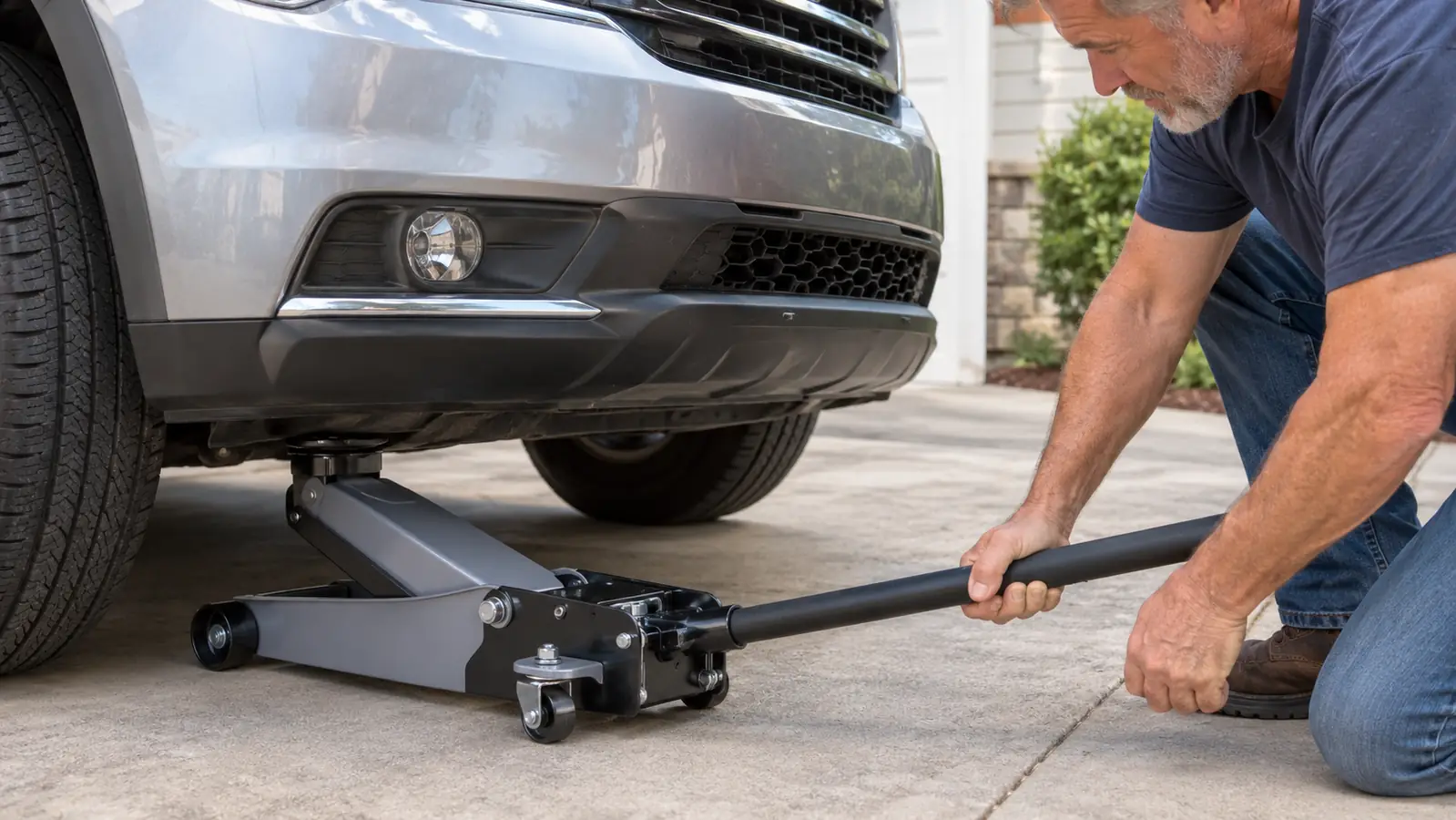
The low profile is the reason most people buy this jack, and it is also the source of its biggest annoyance. The lower the jack sits, the less room you have to swing the handle. On a smooth concrete floor, that is fine. On gravel, or on an asphalt driveway with a soft spot, you will feel every inch of that 3.75-inch clearance. The front of the frame can drag if you push the jack forward while it is already under the car. You learn to lift the handle slightly and roll it in short pulls.
The other thing nobody tells you: the low profile means the lifting point is closer to the ground, so you have to be more careful about where you place the saddle. On my F-150, the frame rail is easy to find. On Marlene's CR-V, the pinch welds are the right spot, and the low saddle makes it easier to line up. But if you are used to a tall steel jack, you will crouch down a little more than you expect.
The first time I used it on the CR-V, I lined the saddle up under the pinch weld and pumped twice before I realized the jack was not centered. It had shifted sideways as I rolled it into place. That is the kind of mistake you only make once, but it is worth knowing before you buy. You have to look at the saddle, not just the handle, when you position the jack.
The handle also takes more room to swing than you might think. In my two-car garage, I have a rolling tool chest on one side and a pegboard on the other. When the jack is under the center of the car, the handle needs a clear arc of maybe four feet. The first time I used it with the garage door closed, I banged the handle into the door track and had to reposition the car. Now I pull the car in at an angle when I know I am going to use the jack.
Where the ARCAN Earns Its Keep
The reinforced lift arm is not just a line on the box. I have had the jack under the front of the F-150 with the truck loaded with firewood, and the lift stayed stable. The hydraulic control includes bypass and overload valves, which means the jack will not over-extend if you pump too far. That is a feature I appreciate, because I have seen what happens when a cheap jack keeps going past its limit.
The lift height is the other reason I keep reaching for it. Eighteen inches is enough to get the truck's front wheels off the ground and still have room for a jack stand at its middle setting. On the CR-V, I can lift one corner, set a stand, and move to the next corner without resetting the jack. That makes a four-corner brake job take half the time it used to.
One Saturday, I had to pull the front calipers off the F-150 to replace a seized slider pin. The truck was up on stands, but I needed the jack to support the lower control arm while I worked. The ARCAN held that corner steady for the better part of an hour while I fought with a rusted bolt. It did not bleed down, and it did not groan. That is the kind of steady behavior that earns trust.
On the CR-V, I have used it for rear brake work and a muffler hanger. The 3-ton capacity is overkill for a car that size, but the extra margin means the jack is never working hard. It lifts smoothly from the first pump, and the handle stays put while I work.
I also used it to lift the rear axle of the F-150 when I replaced the shocks last spring. The truck was on stands, but the axle still had weight on it. I slid the ARCAN under the differential, pumped it up a few inches, and the shocks came out without a fight. That is the kind of job where a jack with a slow, controlled lift makes the difference between a clean afternoon and a cuss-filled one.
A word on upkeep, since nobody tells you this either. A hydraulic jack is a tool that needs a little attention. I check the fluid level once a year, keep the moving parts wiped clean, and store it with the handle down so the lift is fully lowered. That is about ten minutes of care a year, and it is why mine still lifts smoothly after five years. The aluminum body does not rust the way my old steel jack did, so there is less to fight.
After five years, the ARCAN still pumps smoothly and holds pressure. That is the real test of a floor jack, and it passes.
Where It Falls Short
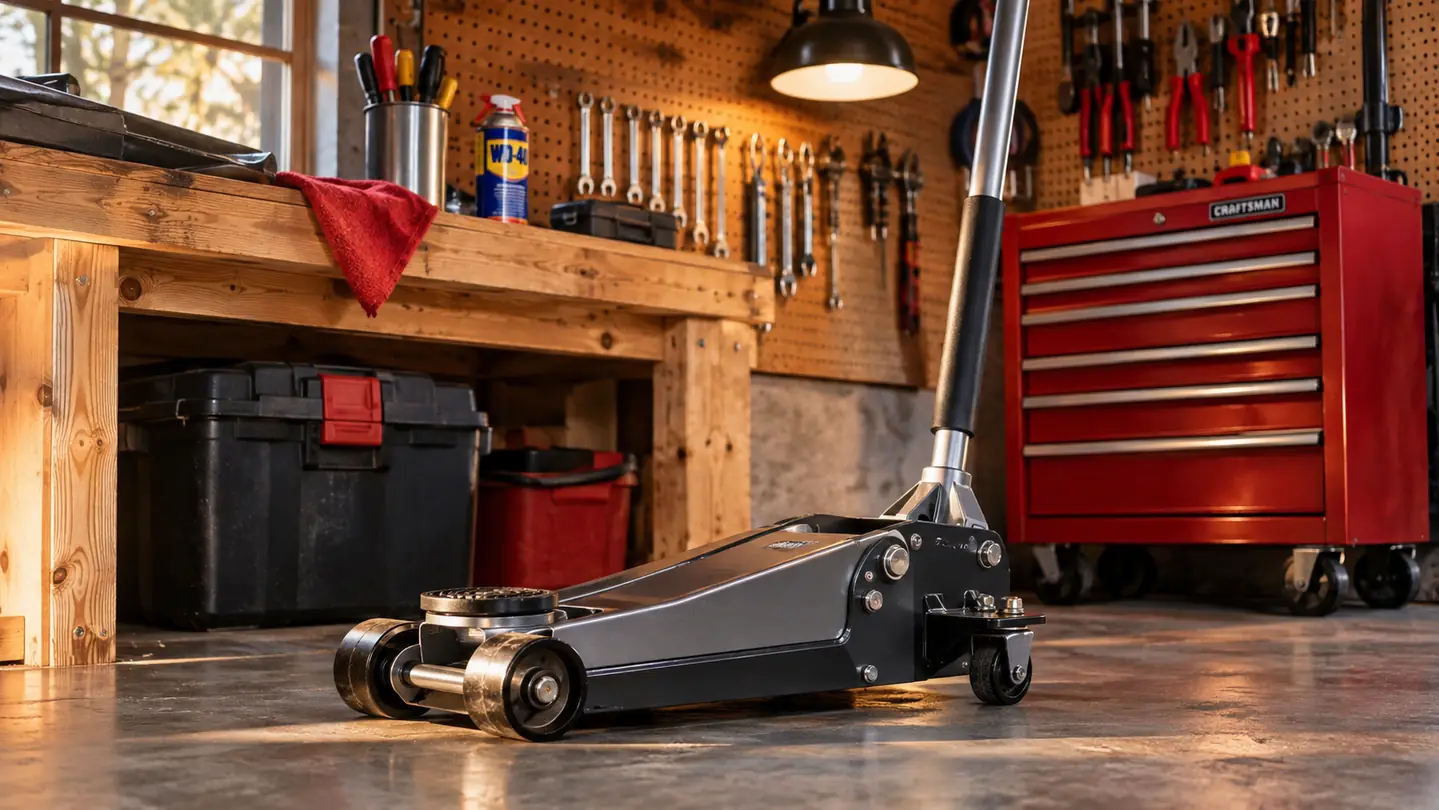
The handle is the weakest part of the experience. It is functional, but the release takes a little getting used to. If you open it too far, the vehicle drops faster than you expect. You learn to turn it in small increments, but it is not as smooth as the release on more expensive jacks. It is a minor complaint, but it is the kind of thing that matters when you are lying on your back with a brake caliper in your hand.
The aluminum body also means you have to be careful about where you set it down. Dropping it on a sharp edge can dent the frame, and a dented frame is a jack you cannot trust. I keep a piece of rubber stall mat under it in the garage, and I set it down gently on asphalt. That is not a flaw in the jack; it is the tradeoff you accept for a 56-pound lifter instead of a 90-pound steel anchor.
The warranty is one year, which is shorter than I would like for a tool that lives under a car. I have not needed it, but I mention it because a lot of buyers assume a 3-ton jack comes with a lifetime warranty. It does not. Read the listing before you buy, and treat the jack well.
Another thing I noticed after a few years: the paint on the frame has worn through in a couple of spots where the handle rubs when the jack is stored upright. It is cosmetic, not structural, but it is the kind of detail that tells you this is a working tool, not a showpiece. A little touch-up paint keeps it from spreading.
The release also took some getting used to because my old steel jack had a different setup. It is a small thing, but when you are under a car, your hand goes where it always went. After five years I do not think about it anymore, but a neighbor who borrowed the jack last fall had the same fumbling moment.
What I Liked
- Aluminum body at 56 pounds is easy to carry and position
- 3.75-inch minimum height fits under low cars like the CR-V
- 18-inch lift height clears jack stands at their middle setting
- Bypass and overload valves protect against over-extension
- Still holds pressure after five years of home use
Where It Falls Short
- The release takes practice; too much turn drops the vehicle fast
- One-year warranty is shorter than many buyers expect
- Aluminum frame can dent if dropped on a sharp edge
- Low profile drags on gravel and soft asphalt
Who This Is For
This ARCAN is for the home mechanic who works on a concrete floor, owns at least one vehicle that sits low, and wants a jack that does not make them choose between their back and their schedule. If you are changing oil in a driveway on a Saturday, or doing brakes on a crossover that the factory jack cannot reach, the low profile and the 18-inch lift height are worth the price. It is also the right jack if you are older and tired of wrestling a heavy steel unit out of the corner.
If you are on the fence, think about the last time you put off a brake job because you did not want to fight the factory jack. That delay is what this tool removes. It is not a luxury item for a home mechanic; it is the difference between doing the work yourself and paying a shop.
The neighbor who borrowed the jack last fall came back and asked where I bought it. He restores old trucks and said it felt steadier than the jack he had been using. His question was the same one I had five years ago: whether a low-profile aluminum jack was worth the money over a cheaper steel unit. My answer is yes, if you work on cars on purpose. If you only change oil when the light comes on, the cheaper jack will do.
Who Should Skip It
Skip it if you work mostly on gravel, dirt, or uneven ground, because the low profile will drag and the aluminum body will complain. Skip it if you need to lift a heavy truck or a van on a regular basis, because the 3-ton capacity is enough for a light truck but you will be at the limit. And skip it if you are the kind of person who will not use jack stands, because no floor jack is worth that risk.
One more group: if you only work on one car and that car is a sedan that the factory jack handles fine, you might not need a 3-ton floor jack at all. The ARCAN is a buy-once tool for someone who expects to keep working on vehicles for years. If your plan is one oil change a year, the cost is harder to justify, and the jack will sit in the corner taking up space.
Five Years In, I Would Buy the ARCAN Again
It is not perfect, but it is the best floor jack I have owned for home use. If you are tired of fighting a scissor jack or hauling a steel anchor around the garage, check today's price on Amazon.
Amazon Check Today's Price on Amazon →