If you have ever replaced brake pads or rotors in your own driveway, you already know the part that makes you want to quit: bleeding the lines. The old way means finding a second person, agreeing on the words 'pump' and 'hold,' and still ending up with a pedal that feels softer than you would like. The Orion Motor Tech one-man brake bleeding kit promises to take that second person out of the job. I have used both methods on my own vehicles, and they are not the same experience.
I am Earl Dobbins, 61, a retired heavy-equipment mechanic. I spent 30 years fixing loaders and graders for a county road department, and I have done my own car work at home for longer than that. My garage is a detached two-car with a concrete floor, a rolling tool chest, a pegboard wall, and one shop light over the bench. I own a 2011 Ford F-150 and my wife Marlene drives a 2016 Honda CR-V. I have bled brakes both ways on both vehicles. The short answer: for a DIY home mechanic who works alone, the Orion Motor Tech kit is worth it. It does not make bleeding magical, and it will not fix a master cylinder that is already failing. But it turns a two-person chore into a job you can do at your own pace, and it does it for less than the price of a single trip to a shop. Here is how the two methods actually compare.
| Orion Motor Tech one-man kit | Two-person pedal method | |
|---|---|---|
| People needed | One, plus a vacuum pump | Two, plus clear communication |
| Setup | Attach the hose, open the bleeder, pump to vacuum | Jack up the car, assign pedal duties, coordinate |
| Pedal feel result | Firm, and you can watch fluid move | Firm only if your helper follows instructions exactly |
| Mess risk | Low, the vacuum draws fluid through the bleeder | Higher, fluid can spray when the bleeder opens |
| Learning curve | Short, but you need to watch the reservoir level | Short, but you need to trust your helper |
| Cost | One-time tool purchase | Free if you already have a helper |
| Best for | Solo driveway work, routine flushes, pad and rotor jobs | A Saturday with a willing friend and no new tool to buy |
Where Orion Motor Tech Wins
The biggest win is the one that is hardest to measure: you stop depending on another person. My wife Marlene has helped me bleed brakes more times than she probably wants to remember. She would sit in the driver seat, pump the pedal on my count, and hold it while I cracked the bleeder. It worked. It also meant we both had to be in the garage at the same time, both had to hear each other over a running engine, and both had to be patient when the job took longer than expected.
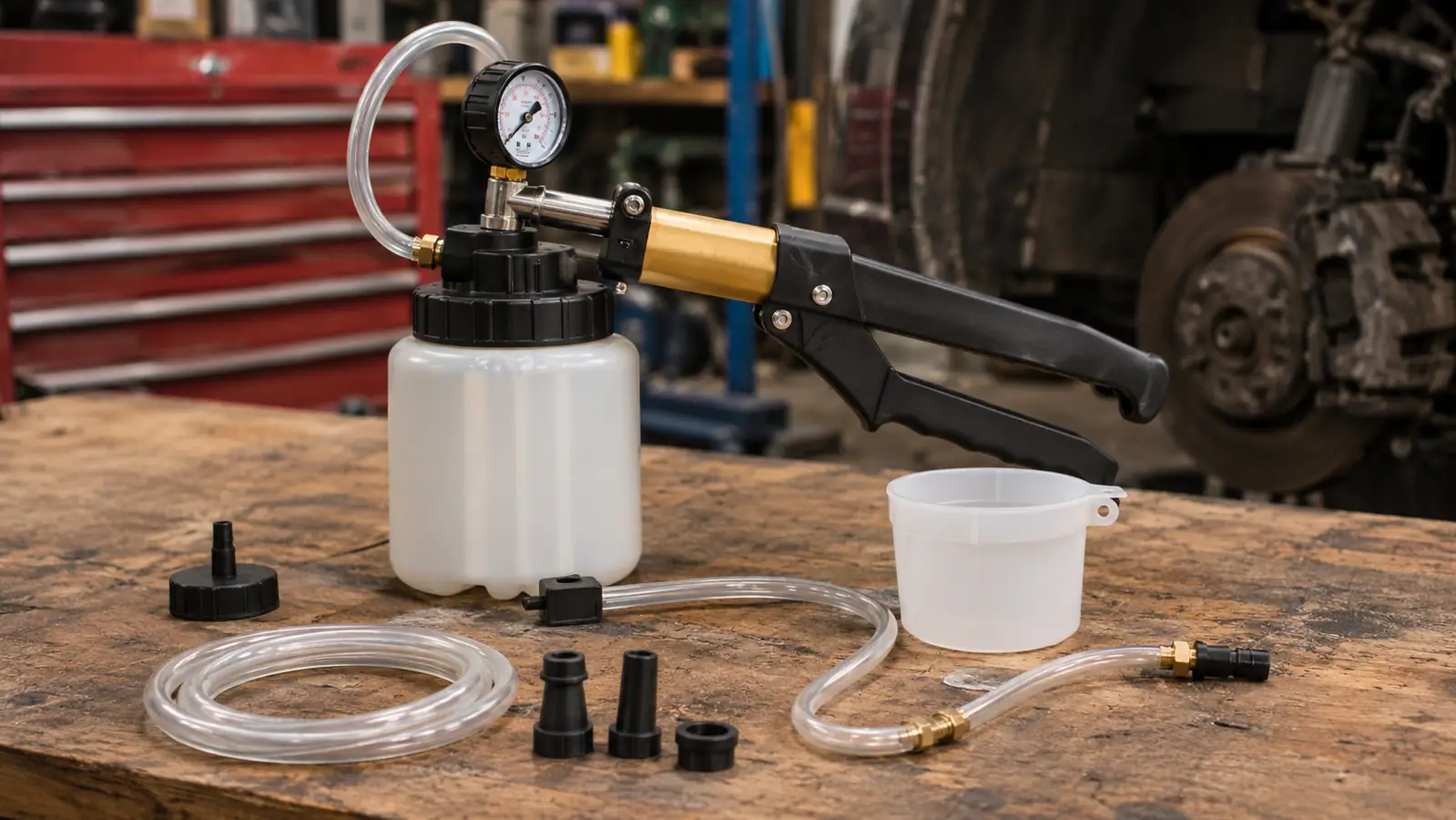
With the Orion Motor Tech kit, that whole coordination problem disappears. The hand vacuum pump pulls fluid through the bleeder valve while you watch the line. You can see when the old fluid stops and clean fluid starts. You can work at your own pace, stop to check the reservoir, and answer the phone without leaving a helper hanging mid-pedal. For anyone who has ever bled brakes alone in a driveway, that is the difference between a chore and a project.
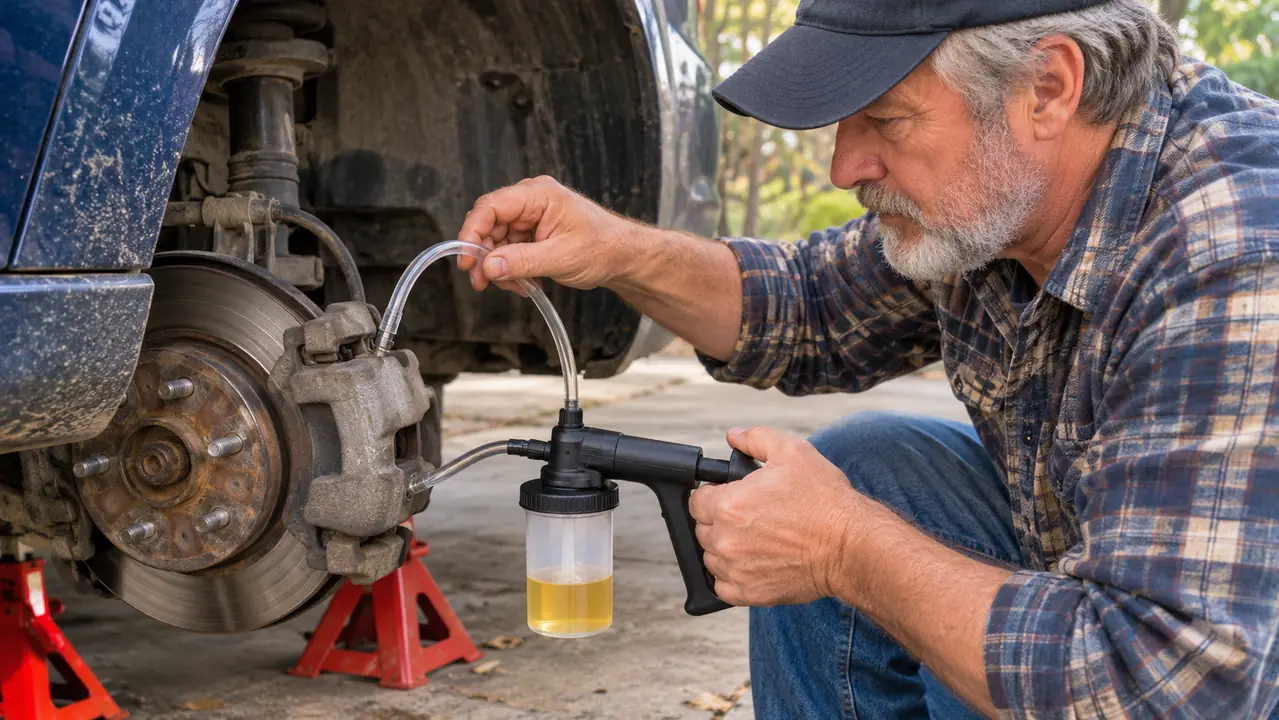
The first time I used it was on Marlene's 2016 Honda CR-V after a pad and rotor job. I had the front end up on jack stands, and I planned to do the rear brakes the following weekend. With the old method, I would have had to ask Marlene to come out twice, once for each end of the car, and she would have had to sit in the driver seat with the engine running while I crawled around. Instead, I ran a line from the bleeder on the right rear caliper, attached the silicone hose to the pump, and worked the handle until the dial gauge showed vacuum. I could see the old fluid moving through the tube, and when it ran clear, I closed the bleeder and moved to the next wheel. The whole job took me about an hour, and I did not have to raise my voice once.
The kit also earns its keep on the 2011 Ford F-150. That truck has more miles than I like to admit, and the brake fluid had never been flushed in the years I have owned it. The old fluid came out looking like tea. I used the Orion Motor Tech pump to pull fresh fluid through all four corners, and the pedal went from spongy to firm in one afternoon. The adapter set that comes with the kit fit the bleeder valves on both vehicles without any fuss, and the blow-molded storage case keeps the pump, hoses, and adapters from rolling around in the drawer. The whole kit weighs 2.09 pounds and the case measures 10.24 by 3.74 by 8.66 inches, so it tucks into a drawer or the back of a shelf.
The dial gauge is worth paying attention to. On a fresh bleed, I like to see the needle hold steady while I crack the bleeder. If the needle drops, it usually means air is getting in around the threads, and I snug the bleeder up before continuing. That feedback is something the two-person method does not give you. With a helper, you find out there is a leak only when the pedal goes soft at the end. With the pump, you find out while you are still at the wheel.
Another thing I appreciate is that the kit works on nearly any vehicle's system, which is what the listing says and what I found in practice. I have used it on the CR-V and the F-150, and I have loaned it to my son Travis for his own car. The adapter set covers the bleeders on all of them. The silicone tubes have held up fine, no cracks or kinks after a year of sitting in the case.
I want to be clear about what the kit will not do. If the master cylinder is leaking internally or a caliper is seeping, no vacuum pump is going to make the pedal firm. You have to fix the underlying problem first. The Orion Motor Tech kit is a maintenance tool, not a repair tool. Used that way, it earns its place. Used as a cure for a broken system, it will just frustrate you.
Where the Two-Person Method Wins
I will be honest: the two-person method still has a place. It costs nothing if you already have a helper. It uses the pedal's own pressure to push fluid through the system, which means you do not need to worry about pulling air in around the bleeder threads. And for a single quick bleed after a minor repair, it can be faster than getting the vacuum kit out of its case, attaching the hose, and finding the right adapter.
It also wins on feel. When you bleed brakes the old way, you feel the pedal firm up in real time. You know the system is full because the pedal stops sinking. With a vacuum pump, you are watching fluid move through a hose instead of feeling pressure through the pedal. That is not a bad thing, but it is a different way to confirm the job is done. If you are the kind of person who trusts your foot more than your eyes, the two-person method will always feel more direct.
There is also something to be said for the two-person method when you are working on a vehicle with a tricky bleeder location. On some cars, the bleeder valve sits in a spot where you cannot get the vacuum hose on it without also losing your grip on the wrench. With a helper, you can crack the bleeder open, have them push the pedal, and close it again before any air gets pulled back in. The helper's foot is doing the work, and your hands stay free to manage the wrench. That is a real advantage on the F-150, where the rear bleeders are not exactly easy to reach.
The two-person method also teaches you what a good brake system feels like. The first time I bled brakes, I was maybe sixteen, and I learned how the pedal should rise and hold. That lesson stuck. If you are teaching a kid to work on cars, having them help with a two-person bleed is not a bad way to start. It gives them a feel for the pedal that a vacuum pump will not give them.
The two-person method also has the advantage of using the car's own hydraulic system to push fluid. That means you are not relying on a vacuum seal at the bleeder. If the threads on a bleeder are worn, a vacuum pump can pull air in around them, and you will spend the whole job chasing bubbles. With a helper, you can keep the bleeder closed except for the moment the pedal is down, which is a more forgiving way to work on older hardware.
And there is the simple matter of company. Brake work is not the most social job, but having someone in the driver seat makes it feel less like a solo project. My wife and I have had some of our best conversations in the garage, with her reading the pedal and me under the truck. That is not a reason to avoid the Orion Motor Tech kit, but it is a reason the old method has not disappeared.
Bleed your brakes without waiting for a second person
The Orion Motor Tech one-man brake bleeding kit puts the whole job in your hands. Check today's price on Amazon and see why solo DIYers keep it in the toolbox.
Amazon Check Today's Price on Amazon →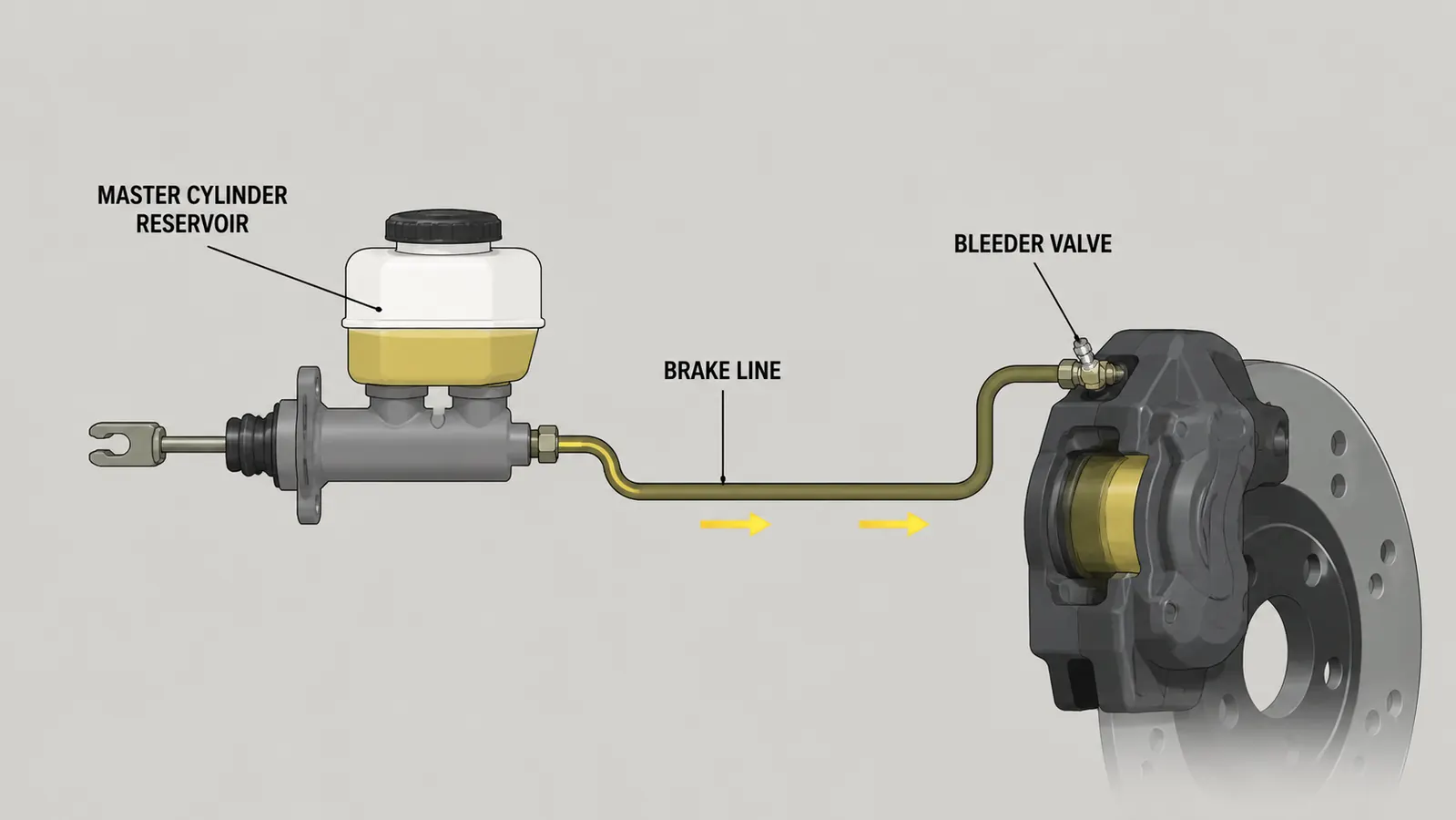
Who Should Buy Which
Buy the Orion Motor Tech kit if you work alone, if you do brake work more than once a year, or if you are tired of asking your spouse or neighbor to sit in the driver seat and pump a pedal. It is also the better choice if you flush brake fluid on a schedule, because you can do the whole job without coordinating with anyone else.
Stick with the two-person method if you bleed brakes once every few years, if you have a willing helper, and if you do not want another tool taking up space in the drawer. The old way still works. It just needs two people, a clear count, and a little patience. For me, the Orion Motor Tech kit earned its spot in the garage the first time I used it on Marlene's CR-V, and it has not moved since.
One more thing worth saying: the kit is not a substitute for understanding how your brake system works. You still need to know which bleeder to open first, how to keep the master cylinder reservoir full, and what to do if the pedal does not firm up after a bleed. The Orion Motor Tech kit makes the job easier, but it does not make the job automatic. That is true of every tool I own, and it is true of this one too.
If you are still deciding, think about the last time you actually bled your brakes. If you cannot remember, that is a sign the two-person method has been costing you more than you realize. A vacuum kit makes it easy enough to flush fluid every couple of years, and that alone is worth the space in the drawer. That is the choice I would make.
Make your next brake job a one-person job
The Orion Motor Tech one-man brake bleeding kit is the tool that finally got my wife out of the driver seat. Check today's price on Amazon and keep it in your toolbox for the next pad and rotor job.
Amazon Check Today's Price on Amazon →