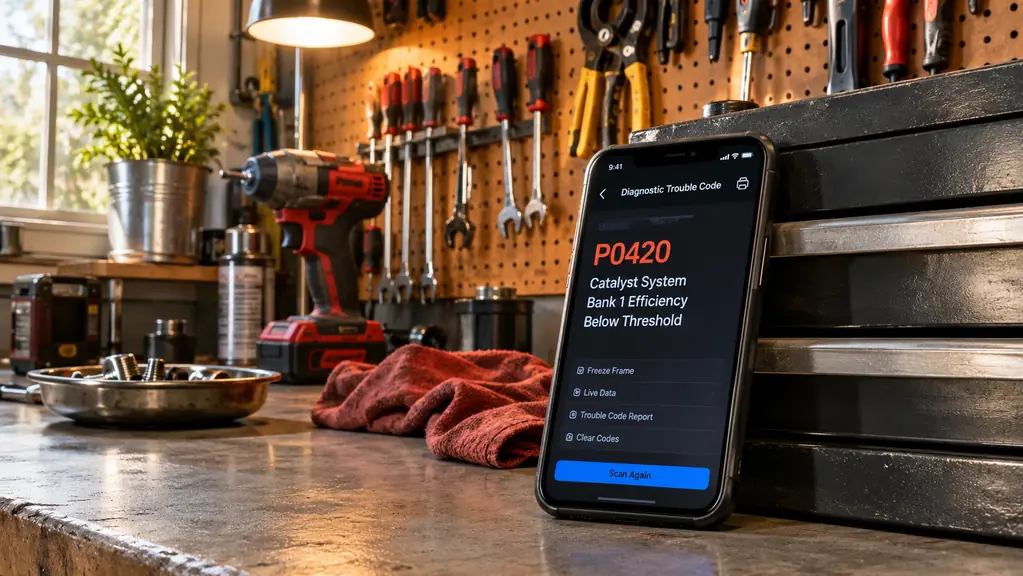
The check-engine light came on in my 2011 F-150 on a Tuesday morning, two years ago. I had a load of scrap to haul and no time to sit in a shop waiting room. My first thought was to drive it over to the local garage and let them plug in their reader. Then I remembered the BlueDriver OBD2 scanner I had been meaning to buy, and I ordered it instead. It arrived in two days. I plugged it into the port under the dash, and it pointed me to a bad oxygen sensor. The part cost less than the shop's diagnostic fee, and I did the swap in a Saturday morning.
That was the start of it. Since then the BlueDriver has lived in my rolling tool chest, and it has earned its spot there. I am Earl Dobbins. I spent 30 years fixing loaders and graders for the county road department, and I still do all the work on my own vehicles in the garage behind my house outside Fresno. This is not a review from someone who plugged a scanner in once and wrote it up. This is ten reasons, from two years of driveway use, why a home mechanic should keep one around. Some of them are about saving money. Some of them are about saving a Saturday. A few of them are about the difference between guessing at a problem and knowing what it is.
Know what that check-engine light means before you pay someone to tell you
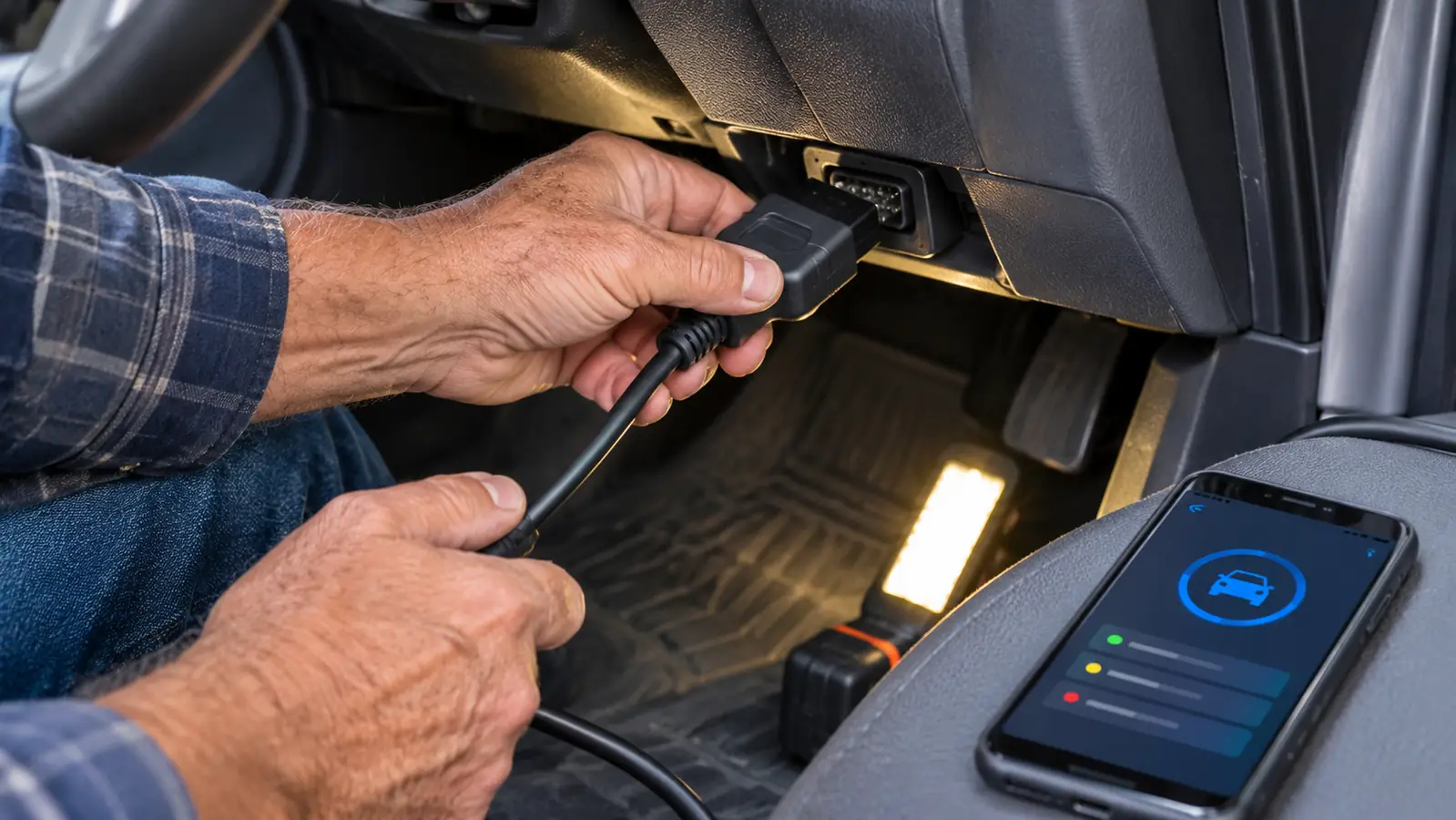
The BlueDriver plugs into your OBD2 port and talks to the BlueDriver app on your phone. Read and clear codes, watch live data, check smog readiness, all without a trip to the shop. No subscription, no wires.
Amazon Check Today's Price on Amazon →It answers the first question: what does that light mean?
The hardest part of a check-engine light is not the repair. It is the not knowing. A basic code reader gives you a number and leaves you guessing, and the internet will happily tell you that the number means six different things. The BlueDriver reads and clears more codes than those basic readers, and it gives you a starting point. When my F-150 lit up, the scanner flagged the oxygen sensor circuit, and I knew where to look before I opened the hood. You still have to do the diagnosis, but you stop guessing. That is half the battle.
It pays for itself the first time you skip the shop
A shop charges a diagnostic fee just to plug in a reader and tell you what the light means. The BlueDriver does the same job in your driveway, and it does it every time after that for nothing. The first time you use it instead of driving to a garage, you have covered a big share of what the tool cost. Everything after that is money in your pocket, and the tool is still sitting in your chest waiting for the next light.
No subscription, no monthly bill, no surprises
Some scanners want a subscription before they will show live data or the deeper test results. This one does not. The title says it plainly: no subscription. You buy the BlueDriver, download the app on your phone, and you own the whole thing. The app runs on iOS and Android, so it works whether your phone is an iPhone or something else. That matters when the tool sits in your chest for months between uses. It does not nag you for a renewal, and it does not turn into a paperweight when the free trial runs out.
Live data while you drive, not just a parked code
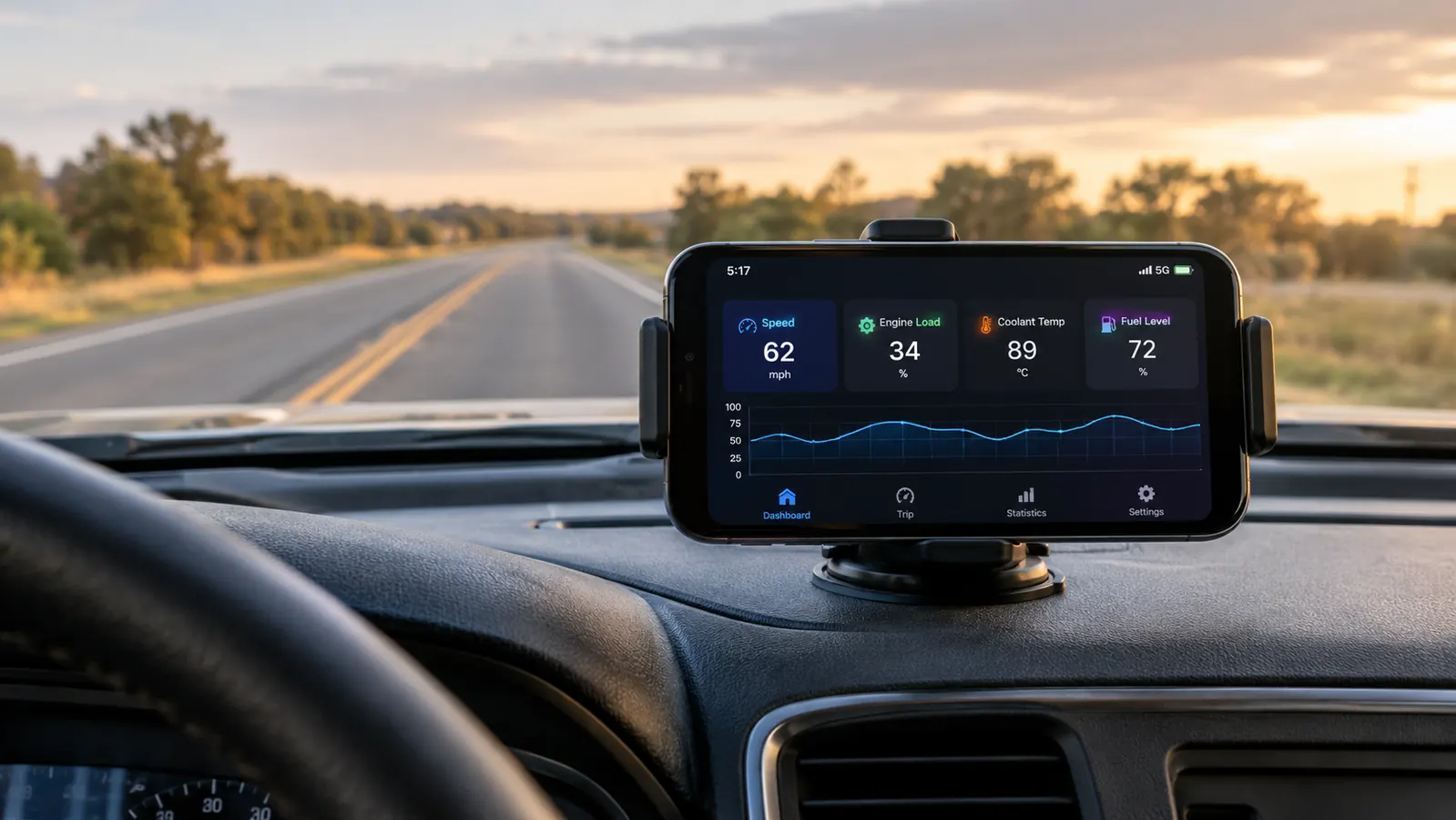
Codes tell you what failed. Live data tells you what is happening right now. The BlueDriver app monitors live vehicle data as you drive, so you can watch a reading climb, drop, and settle instead of guessing from a stored code. That is the difference between replacing parts and finding the problem. I have sat in the driver's seat with the phone in the cup holder, watching the numbers move while Marlene drove, just to confirm a part was doing its job.
Freeze frames capture the moment the light came on
When the check-engine light trips, the truck's computer saves a snapshot of what the engine was doing at that exact moment. That snapshot is the freeze frame, and the BlueDriver shows it to you. Instead of asking yourself what the truck was doing when the light came on, you can look at the data from that moment. That single feature has saved me from chasing the wrong part more than once, and it is something a lot of cheap readers leave out entirely.
Smog readiness checks before you waste a trip to the test station
Here in California, a smog check is part of owning a car. If the computer is not ready, you fail and you pay to come back another day. The BlueDriver checks smog readiness before you go, so you know whether the monitors have finished their drive cycles. It has saved me a wasted afternoon with Marlene's CR-V, and it will save you one too if your state does emissions testing.
Mode 6 test results for the guy who wants the full story
Mode 6 is the emissions system's own self-test data. Most basic readers never show it, because most basic readers were built to do one job. The BlueDriver analyzes Mode 6 test results, which is how you see a monitor passing by a thin margin and fix it before it becomes a failure. It is the kind of depth you expect from a shop-grade tool, not a pocket reader, and it is there on the phone screen whenever you want it.
It reads ABS, SRS, and TPMS codes, not just engine codes
A check-engine light is only one of the lights on the dash. The BlueDriver also reads ABS, SRS, and TPMS codes, which covers the brakes, the airbags, and the tire pressure system. That is where a basic code reader runs out of room. One tool instead of three, and one app to learn instead of three.
One scanner for every gas vehicle in the family
The BlueDriver works with gas-powered vehicles made in 1996 or newer, plus select light-duty trucks. In my garage that means the 2011 F-150, Marlene's 2016 CR-V, and whatever Travis drives over from Sacramento when he needs a hand. It plugs into the OBD2 port under the dash and connects to the app over Bluetooth, so there are no wires to untangle and no place to mount a separate screen. One tool covers the whole driveway, and it covers the kids' cars too when they show up with a question.
A 180-day guarantee and the peace of mind that comes with knowing
BlueDriver backs the scanner with a no-risk, 180-day, 100% money back guarantee. If it does not earn its place in your garage, you send it back and that is the end of it. What you keep is the peace of mind that comes from knowing what your vehicle is telling you, whether you are in the driveway or a thousand miles from home. That peace of mind is the real reason it stays in my chest.
What I'd Skip
Who should skip it? If you never turn a wrench and you just want the light to go away, a shop is still the easier answer. If you only need to read one code once, a basic reader will do. And if you work on diesel trucks for a living, you already know this tool is aimed at gas vehicles, so it is not your primary scanner. For the home mechanic who wants to understand the vehicle, though, it is hard to beat.
When my F-150 lit up, the scanner flagged the oxygen sensor circuit, and I knew where to look before I opened the hood.
Give your check-engine light a second opinion before you pay for the first one
Two years in my garage, ten reasons above, and nothing to renew after the first day. No subscription, no cables, no trip to the shop just to find out what the light means.
Amazon Check Today's Price on Amazon →