If you do your own work in a driveway or a one-car garage, you already know the two ways a bolt gets ruined. You either guess at the torque and leave a lug nut loose, or you lean on a breaker bar and stretch a caliper bracket bolt until it complains. I did both for years before I bought the GEARWRENCH 1/2 Drive Electronic Torque Wrench, model 85077. I have owned it for about three years now, and it has been on lug nuts, caliper bracket bolts, and spark plugs on my 2011 Ford F-150 and my wife's 2016 Honda CR-V. This is the long-term review I wish someone had handed me before I spent the money.
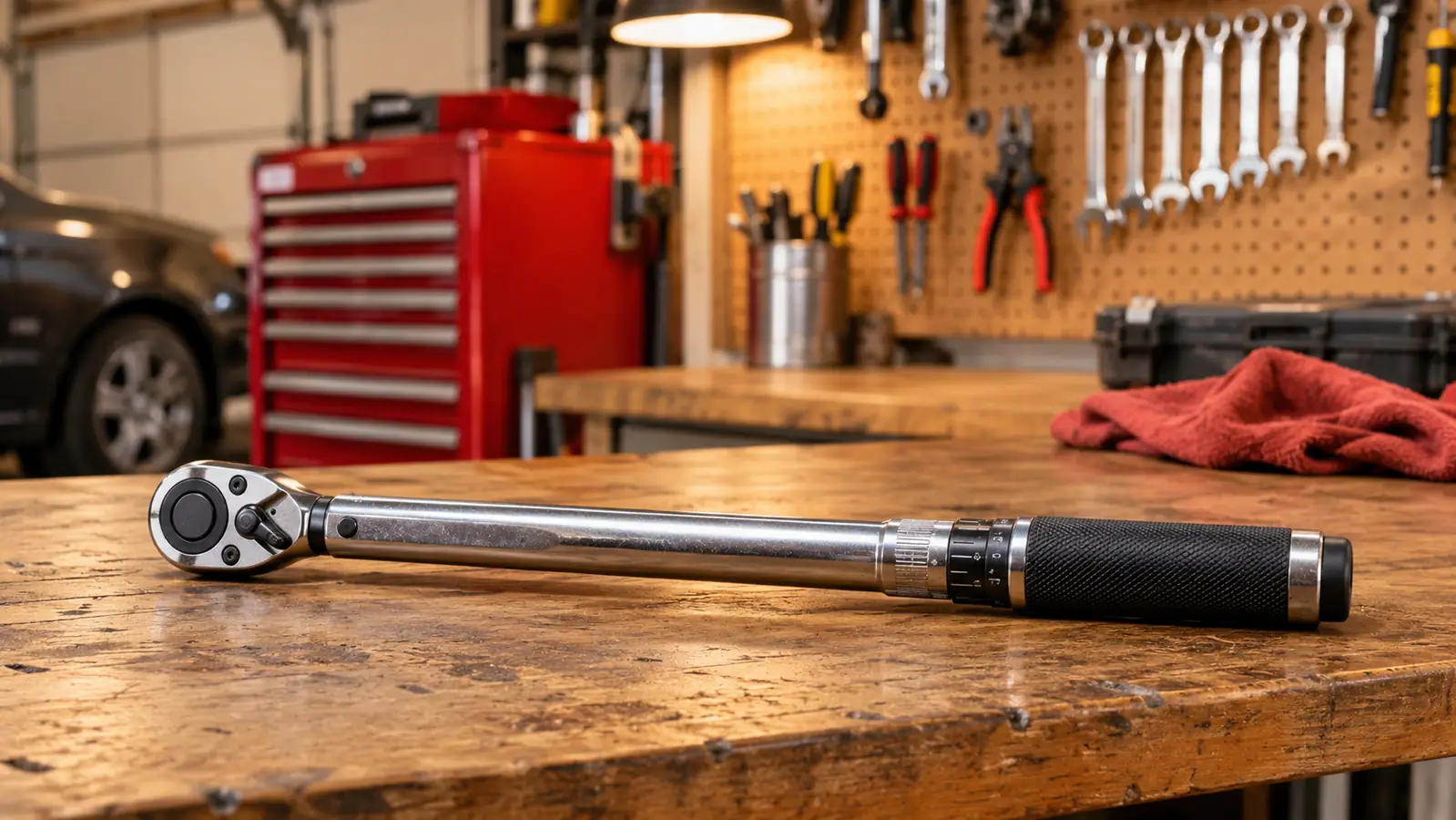
The short version is that it earns its place in my tool chest, but it is not the tool for every job in the garage. It is a 25.65 inch long, 3 pound electronic torque wrench with a 72-tooth ratchet, a flex head, and a Target Torque Alert that vibrates the handle, sounds a buzzer, and lights an LED as you approach the setting. If that sounds like a lot of tool for a home mechanic, you are right. That is both the point and the catch.
The Quick Verdict
The GEARWRENCH electronic torque wrench is the most trustworthy way I have found to torque lug nuts and caliper bolts in a home garage, as long as you treat it as a precision instrument and not a beater ratchet.
Amazon Check Today's Price →Stop guessing at lug nut torque
Three years in, this is still the tool I reach for every time a wheel goes back on. Check today's price on Amazon and see if it fits your garage.
Amazon Check Today's Price on Amazon →How I've Used It
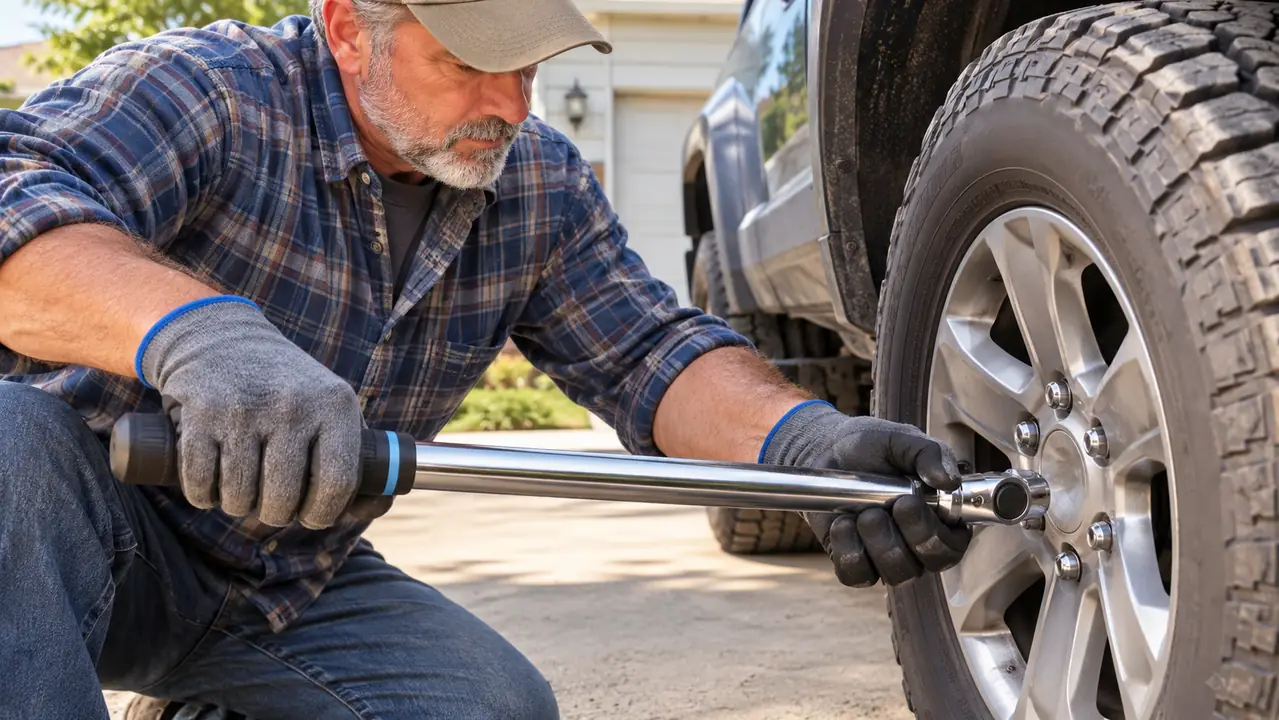
My routine has been the same since the wrench showed up. The F-150 gets its tires rotated twice a year, and the CR-V gets the same. That means at least four wheels-off jobs a year, and on the truck that is six lug nuts per wheel. Before this wrench, I torqued lug nuts with a four-way and called it good. I was younger then and luckier than I deserved.
The GEARWRENCH gets used in three places. Lug nuts on both vehicles get set to spec with the wrench after I seat them with a socket. Caliper bracket bolts get the same treatment whenever I do brakes, which is how I found out the CR-V's rear caliper brackets had been under-torqued from the factory. I had done the same job once before with a click-type wrench borrowed from Travis, and I had second-guessed every bolt. That discovery happened on a rear brake job in March two years ago. I had pulled the calipers off to replace the pads and rotors, and when I went to put the bracket bolts back, two of the four took noticeably more turns than they should have before the alert sounded. They had been set with a guess instead of a spec, probably during a quick brake job at a chain shop the previous owner used. That is exactly the kind of thing you never find out until a bolt works loose at highway speed, and it is the reason I have checked every caliper bolt on both vehicles with this wrench ever since. And spark plugs on the F-150 get set with it because the 5.0 liter engine's plugs are easy to over-tighten into an aluminum head. I have also used it on suspension bolts and once on a trailer hitch ball, but those three jobs are the ones it does every year without fail.
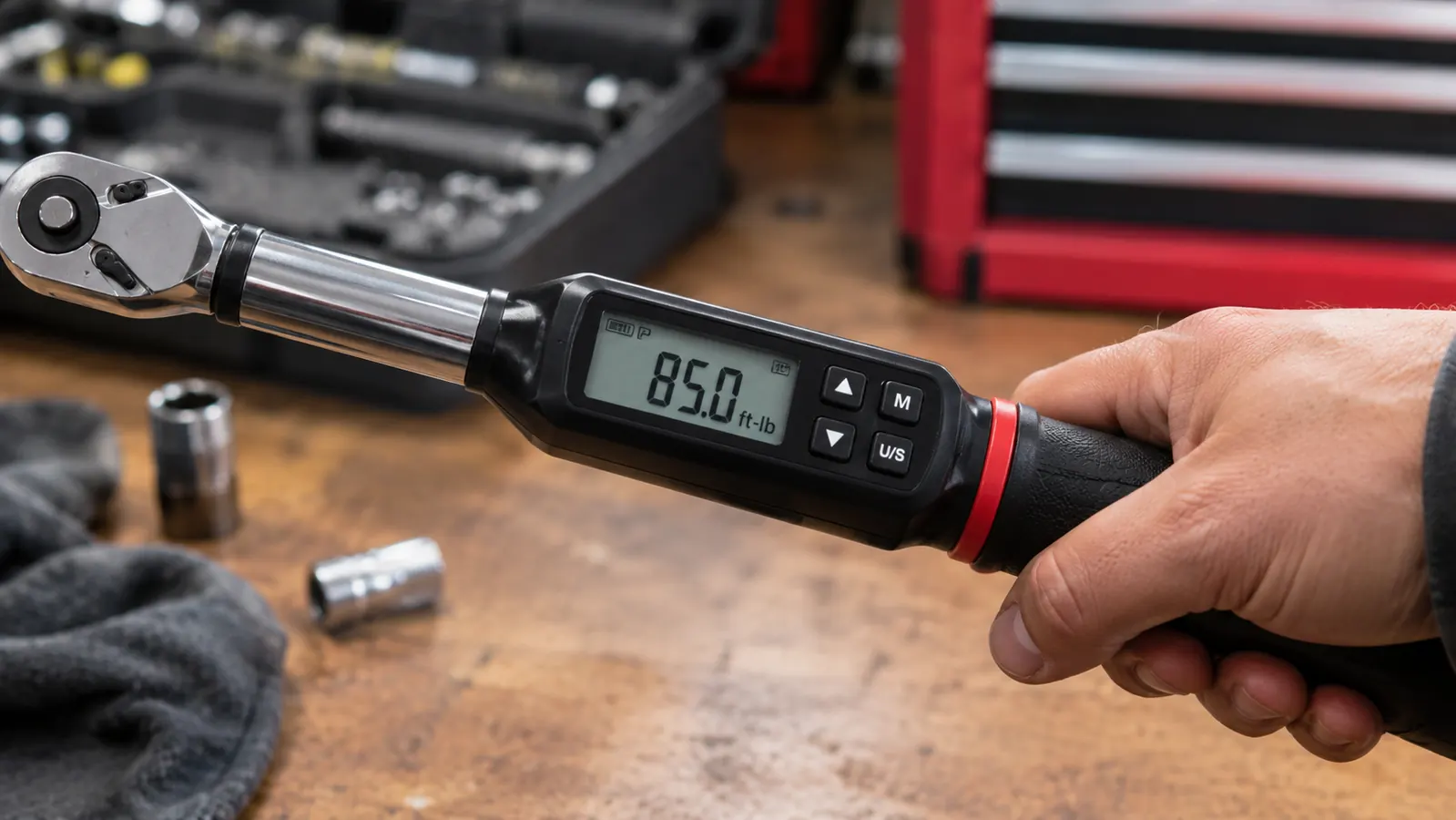
The wrench takes two AA batteries, and that matters more than you would think. I keep a spare set in the tool chest because the day it dies is always the day you need it. The display is straightforward: it shows torque in five units, including ft-lb and Nm, and the 5 degree swing arc of the 72-tooth ratchet means you can use it in tight spots without swinging the handle a foot and a half. That flex head has saved me more than once on the CR-V, where the rear caliper bolts sit close to the knuckle.
The Target Torque Alert Is the Whole Story
The feature that sold me was the Target Torque Alert, and three years later it is still the feature I would not give up. As you approach the target torque, the handle vibrates, a buzzer sounds, and an LED lights up solid. You feel it, you hear it, and you see it. That triple warning matters when you are lying on your back under a car with safety glasses on and a radio going. You do not have to look at the display to know you are close. I remember the Saturday it proved itself to me. I was on my back under the F-150, torquing suspension bolts after a ball joint job. The radio was on, my safety glasses were fogging up, and I could not get my head into a position to see the display. As I pulled, the handle started to vibrate. I stopped, slid out from under the truck, and looked at the readout. It was sitting right on the number I had set. With a click-type wrench, I would have been trying to feel a click through a greasy glove while holding the tool at an awkward angle. The GEARWRENCH told me I was there without making me look. That is the difference between a tool that makes you work and a tool that works with you.
The accuracy spec is what separates this from a cheap beam-style wrench. GEARWRENCH rates it at plus or minus 2 percent clockwise and plus or minus 3 percent counterclockwise between 20 and 100 percent of the wrench's capability. That is not laboratory grade, but it is plenty for lug nuts, caliper bolts, and spark plugs. For comparison, a typical click-type wrench is often rated around plus or minus 4 percent. The electronic readout also takes the guesswork out of the job. You do not have to count clicks or trust a scale. You set the number, and you watch it climb.
One honest note: the alert is a warning as you approach the target, not a hard stop. The wrench will not refuse to over-torque. It will vibrate and buzz and light up, and then it is on you to stop. If you are the kind of person who keeps pulling after the buzzer, this wrench will not save you from yourself. I have never had it let me down, but I have also learned to slow down in the last few foot-pounds.
The vibration, the buzzer, and the LED all fire as you approach the number. You do not have to look at the display to know you are close, and on your back under a car, that is the whole point.
What Three Years of Daily Garage Use Taught Me
The first thing you notice is the weight. At 3 pounds and 25.65 inches long, this is not a delicate instrument. It is a working tool. The alloy steel construction and polished finish have held up to being dropped on a concrete floor at least twice, and it still reads accurately. The first drop happened about six months in. I had the wrench on the bench while I was swapping the CR-V's winter tires, my elbow caught the handle, and it hit the concrete head first, right on the flex head. I picked it up, checked the housing, and finished the job. When I got to the last lug nut, I compared the display against the setting and it was dead on. The second drop was last fall, same story. I am not recommending you drop yours, but this tool has taken the kind of abuse a home garage dishes out and it still reads true. The alloy steel body has a few scuffs now, and the polished finish on the handle shows wear where my hand grips it, but nothing has loosened and nothing has drifted. The flex head is the part I expected to wear out first, and it is still tight after three years.
The 72-tooth ratchet with its 5 degree swing arc is the quiet hero of this wrench. In a home garage, you are constantly working around brake lines, suspension arms, and frame rails. A ratchet that needs 10 degrees of swing to click is useless in those spots. The GEARWRENCH clicks over in 5 degrees, which means you can work a bolt in a space the size of your fist. That is the difference between a 20 minute brake job and a two hour one.
Battery life is the one thing I did not expect to think about. The wrench does not drain batteries when it sits in the drawer, but it does not tell you the battery is low until it is. I have learned to swap the AAs every spring whether it needs it or not. A dead torque wrench is just a very expensive ratchet, and I would rather spend two dollars on batteries than redo a brake job.
The calibration warranty is worth reading before you buy. GEARWRENCH covers the tool with a 1 year limited warranty, and the calibration accuracy is warrantied for 90 days. That is not a knock on the tool, but it is a fact you should know if you are buying this to use professionally every day. For a home garage, where the wrench gets used a few dozen times a year, that has been more than enough.
Where the GEARWRENCH Falls Short
No review is honest without the cons, and this wrench has three. First, it is long. At 25.65 inches, it can be awkward in tight engine bays. I have had to reach for a stubby ratchet more than once because the GEARWRENCH simply would not fit. The worst case was a Saturday last summer when I was helping Travis replace an alternator in my driveway. The upper mounting bolt sat right behind a coolant hose, and no matter how I angled the flex head, the wrench would not go in. I ended up using a stubby ratchet with a crow's foot and torquing by feel, and I hated every second of it. Second, it needs batteries, and it gives you very little warning before it quits. That bit me in the middle of a lug nut job on the CR-V. The display blinked, the wrench quit, and I finished with a click-type wrench while adding AA batteries to my shopping list. The worst part was that the wrench gave no warning the day before. It worked fine on the truck, and then it was dead on the CR-V. Third, the electronic display is not backlit, which means you will be holding a flashlight or angling the wrench toward the shop light if you work after dark. Most of my evening jobs happen under that single light over the bench, and I have learned to position the display so it catches the beam.
The bigger frustration is the price. This is not a cheap tool, and for a home mechanic who only torques lug nuts twice a year, a good click-type wrench may be the smarter buy. I will get to that in a moment. But for anyone who does brakes, suspension, or engine work on a regular basis, the electronic readout and the alert system are worth the difference.
What I Liked
- Target Torque Alert with vibration, buzzer, and LED is easy to use without looking at the display
- 72-tooth ratchet with 5 degree swing arc works in tight spots
- Plus or minus 2 percent clockwise accuracy is solid for home and hobby use
- Flex head reaches awkward caliper and suspension bolts
- Reads in five torque units, so it works for both metric and SAE fasteners
Where It Falls Short
- Needs 2 AA batteries and gives little warning before they die
- 25.65 inch length is too long for some tight engine bays
- Display is not backlit, so it is hard to read in low light
- Calibration accuracy is only warrantied for 90 days
- More expensive than a good click-type wrench
Who This Is For
This wrench is for the home mechanic who has felt that moment of doubt after torquing a lug nut by feel. If you do your own brake jobs, rotate your own tires, or replace your own suspension parts, the GEARWRENCH gives you the same confidence a shop has, without paying shop rates. It is especially worth it if you work on more than one vehicle, because you will use it on every wheel and every caliper bolt that comes through your garage.
It is also for the older mechanic whose hands are not what they used to be. I am 61, and I have spent 30 years turning wrenches on loaders and graders for a county road department. My grip strength is not what it was at 40. The vibration alert means I do not have to feel the torque through arthritic knuckles. I can let the tool tell me when to stop. That alone has saved me from over-torquing more than one bolt.
Who Should Skip It
If you only change a tire once a year on the side of the road, buy a good click-type torque wrench and save the money. The electronic readout, the flex head, and the five torque units are features you will never use. A click-type wrench is simpler, cheaper, and has no batteries to die at the worst moment.
Skip it too if you are the kind of person who throws tools in a drawer and forgets about them. This wrench needs a little respect. It needs fresh batteries, a dry place to live, and a user who will slow down when the buzzer sounds. If that does not sound like you, the GEARWRENCH will just be an expensive way to learn that you should have bought the cheaper ratchet.
The tool I reach for every time a wheel goes back on
After three years, the GEARWRENCH electronic torque wrench is still the first thing I grab for lug nuts and caliper bolts. If that sounds like the tool your garage is missing, check today's price on Amazon.
Amazon Check Today's Price on Amazon →