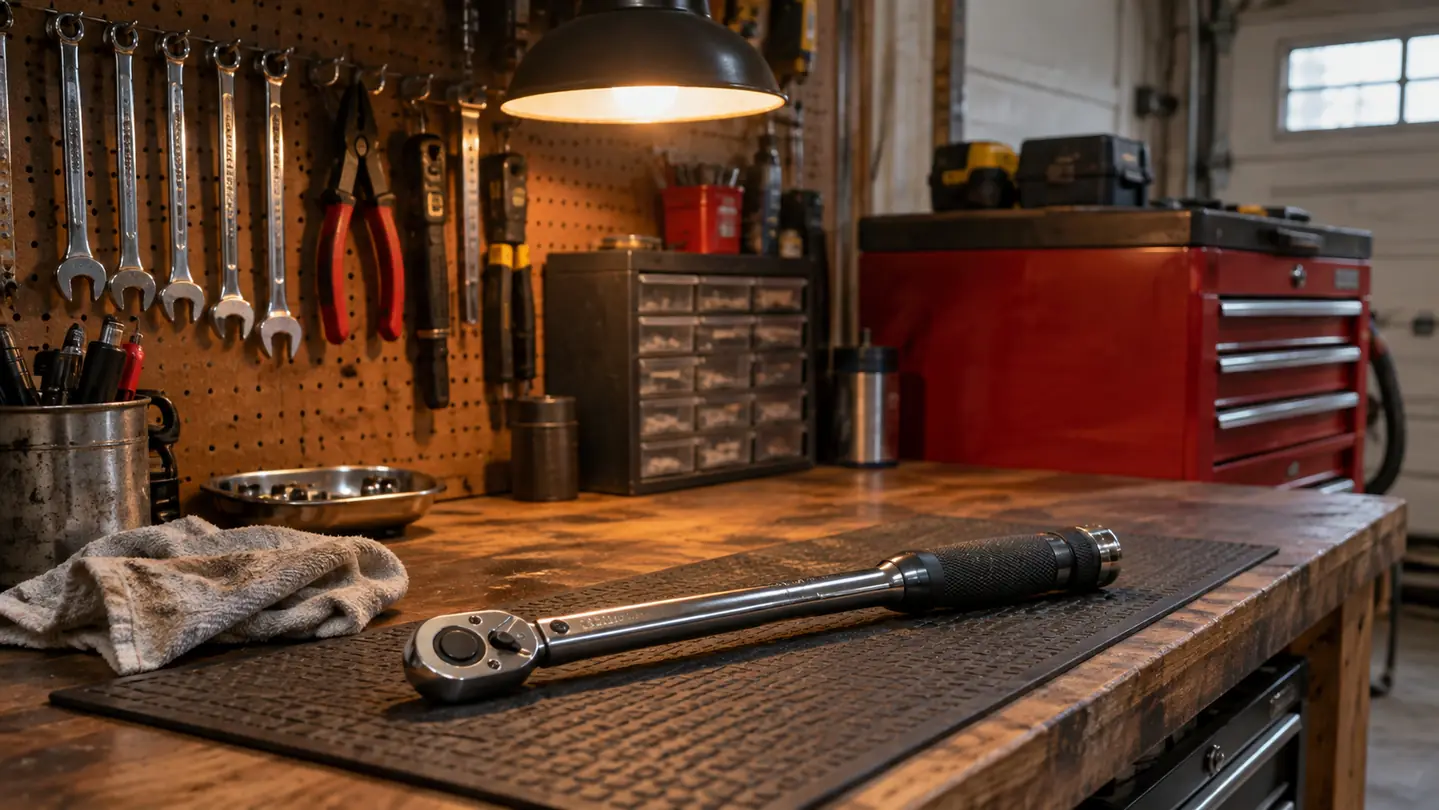
I spent 30 years fixing loaders and graders for a county road department, and I have owned my share of tools that earned their spot in the box. The GEARWRENCH 1/2 Drive Electronic Torque Wrench is one of them. I have had mine about three years now, and it gets used for lug nuts, caliper bracket bolts and spark plugs on my 2011 F-150 and my wife's 2016 Honda CR-V. It lives in the top drawer of my rolling chest, and it comes out for every wheel job. If you do your own work in a driveway or a one-car garage, here are ten reasons a torque wrench like this one earns its place.
Stop Guessing at Lug Nuts
The GEARWRENCH 1/2 Drive Electronic Torque Wrench takes the guesswork out of every wheel job. Check today's price on Amazon.
Amazon Check Today's Price on Amazon →Lug Nuts That Stay Put
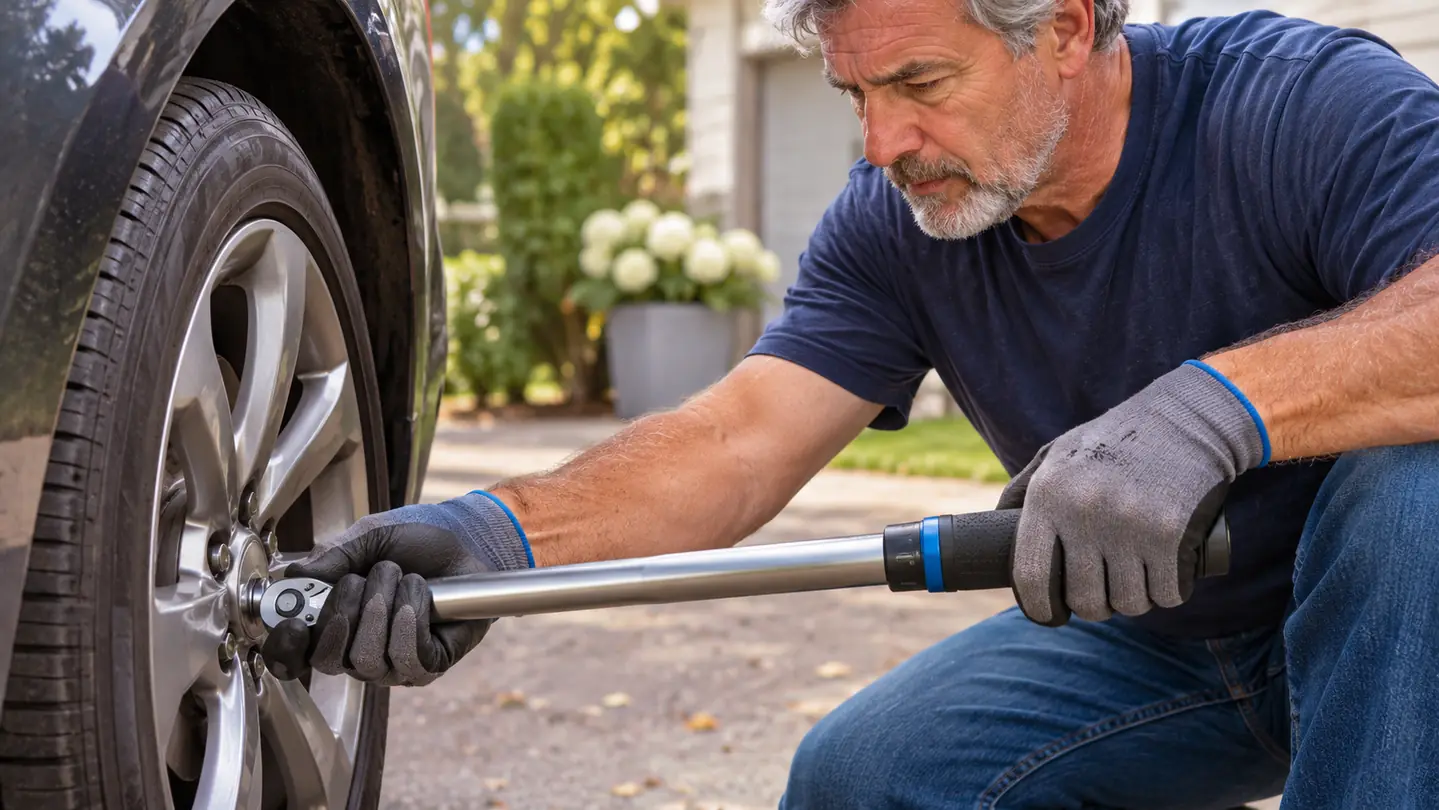
A torque wrench is about not having to deal with a wheel coming loose. I have seen what happens when a lug nut gets snugged by feel and nothing else. A neighbor of mine did that after rotating his tires, and three days later he was on the side of the road with a wheel that had worked itself loose. It did not come off, but it wallowed out the holes in his steel wheel before he noticed the wobble. That turned a fifteen-minute job into a new wheel. I torque the lug nuts on both vehicles to the number in the owner's manual every time the wheels come off. The GEARWRENCH lets me set each one to the same spec, so the wheel sits flat and stays that way.
No More Stretched or Broken Studs
The flip side of too loose is too tight. Crank a lug nut down with a long breaker bar and you can stretch a stud or snap it clean off. I have broken studs before, and it is never a quick fix. The last one cost me an afternoon because the wheel had been over-torqued by whoever worked on it before me, and the stud had stretched instead of breaking clean. On a truck at home, a snapped stud means pulling the hub, and that turns a tire rotation into a weekend project. A torque wrench stops you before you get there. The GEARWRENCH gives a warning as you approach the target, so you know when to ease off and let the tool do the deciding instead of your arm.
You Know the Number, Not Just the Feel
Feel lies to you. A greased thread feels different from a dry one, and a warm hub changes things too. My 2011 F-150 calls for 150 ft-lb on the lug nuts. Marlene's 2016 CR-V calls for 80 ft-lb. Those are very different numbers, and neither one is what my arm would guess after a long day under the truck. The GEARWRENCH reads out in Nm, ft-lb, in-lb, Kgf-m and Kgf-cm, so I can set it to the number the manufacturer calls for instead of trusting my arm. I look up the spec, set the wrench, and pull until it tells me to stop. I have torqued enough bolts by feel to know that my arm is not a calibrated tool, especially on a hot afternoon.
It Warns You Before You Get There
The Target Torque Alert is the feature I use on every job. The first time I used it was on the F-150 after a tire rotation. I set the wrench, pulled, and felt the handle start to vibrate just before the buzzer sounded. That little bit of warning is what keeps you from overshooting. As you approach the target, the handle vibrates, a buzzer sounds and an LED light comes on. You do not have to stare at a screen while you pull. You feel it and you know.
It Works in Tight Spots
I have skinned my knuckles more times than I can count reaching for a bolt behind a caliper. The 72-tooth ratchet mechanism has a 5 degree swing arc, which matters more than you think when you are working behind a caliper or up inside a wheel well. You do not need a full swing to get a click. That saves knuckles and time, and it keeps you from rounding off a bolt head because you could not get the tool seated straight.
The Accuracy Is Good Enough for Real Work
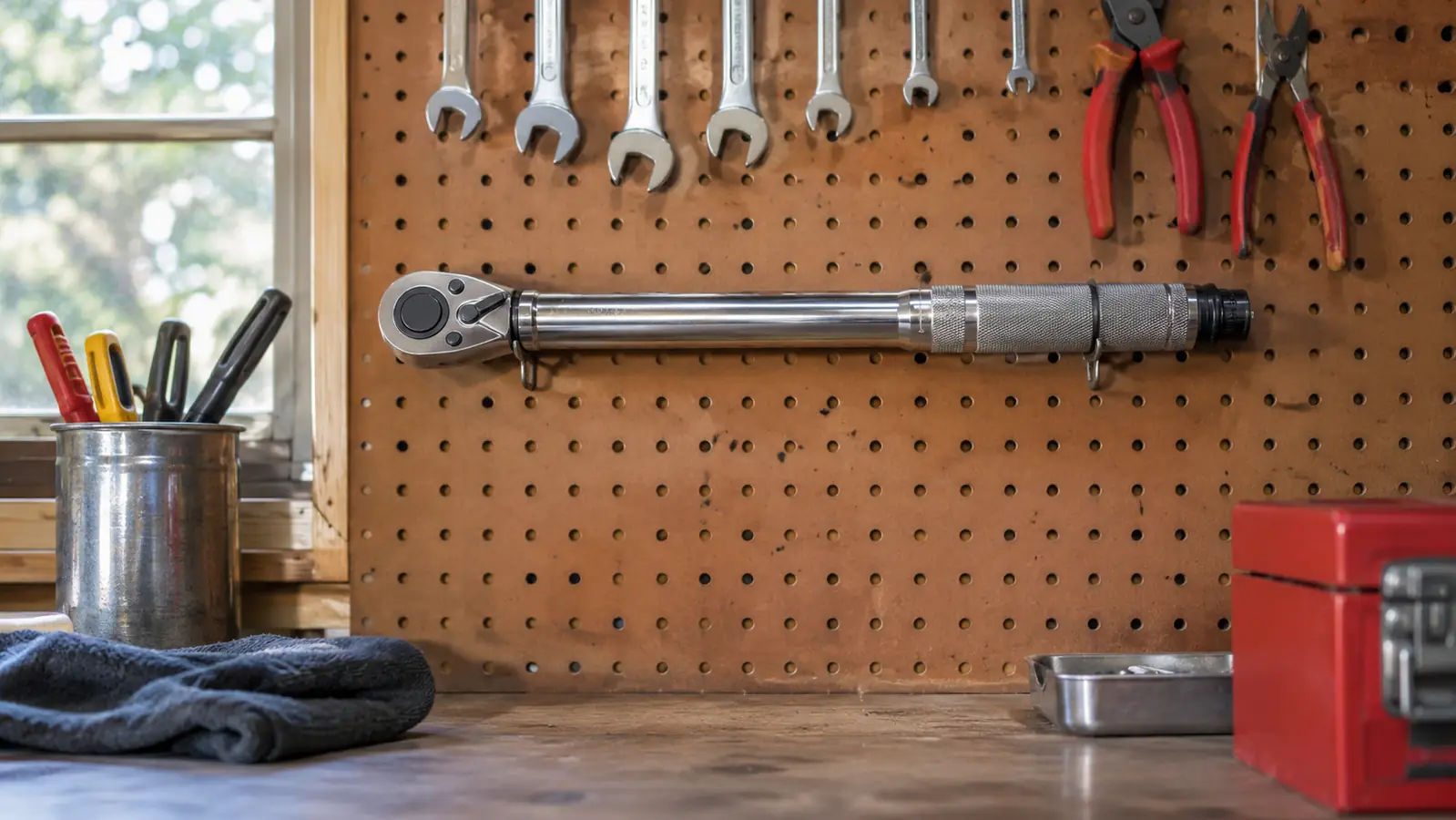
GEARWRENCH rates this wrench at plus or minus 2 percent clockwise and plus or minus 3 percent counterclockwise between 20 and 100 percent of its range. For lug nuts and brake work, that is plenty. You are not building a racing engine, but you are not guessing either. I checked mine against a beam-style wrench I kept from the county shop, and it agreed within a couple of ft-lb at the settings I use.
It Covers Everything from Lug Nuts to Spark Plugs
The range runs up to 340 Nm, which covers lug nuts on a 2011 Ford F-150 and the caliper bracket bolts on my wife's 2016 Honda CR-V. I have also used it for spark plugs, where going too tight can crack a porcelain insulator. I learned that lesson the hard way years ago on a small block, and I have never gone back to guessing. At 25.65 inches long, it gives me enough leverage without being awkward to handle, and at 3 pounds it does not wear out my arm on a long job. One wrench does all of it.
You Can Hand It to Someone Else
When my son Travis brings his car over, I hand him the GEARWRENCH and tell him the number. He does not have 30 years of feel in his hands. The wrench gives him the same result I get. That is worth a lot when the person doing the work is still learning.
It Keeps Brake Work Honest
Caliper bracket bolts need to be tight, but not destroyed. I have seen stripped threads and broken brackets from people leaning on a ratchet with a cheater pipe over the handle. With the GEARWRENCH, I torque those bolts to spec and move on. When I did the pads and rotors on the CR-V last spring, I used the wrench on every bracket bolt and every lug nut, and the job went back together the way it came apart. Same for the lug nuts after any brake job.
It Pays for Itself the First Time You Use It
A wheel that comes loose on the highway, a broken stud, a ruined caliper bracket. Any one of those pays for a torque wrench. I am not going to quote a price because prices move. I will say the GEARWRENCH is the kind of tool you buy once and use for years.
What I'd Skip
I would skip it if you only ever work on one vehicle and never touch the wheels. If you are the kind of person who pays a shop to rotate tires and only opens the hood for an oil change, you can get by without a torque wrench. I would also skip it if you are not willing to read the numbers in the owner's manual. The wrench only helps if you actually look up the spec and set it. And I would skip it if you expect the tool to do the thinking for you. It is a tool, not a mechanic. You still have to put the wheel on straight and tighten the lug nuts in the right order.
One wheel that comes loose on the highway, one broken stud, one ruined caliper bracket, and the wrench has already paid for itself.
Give Your Lug Nuts the Same Torque Every Time
The GEARWRENCH 1/2 Drive Electronic Torque Wrench belongs in a home garage. Check today's price on Amazon and see for yourself.
Amazon Check Today's Price on Amazon →