Travis called on a Friday night. His brakes felt grabby, the steering wheel pulled to the right, and he had a long drive to Sacramento planned for Sunday. I told him to bring the car over Saturday morning and we would take a look.
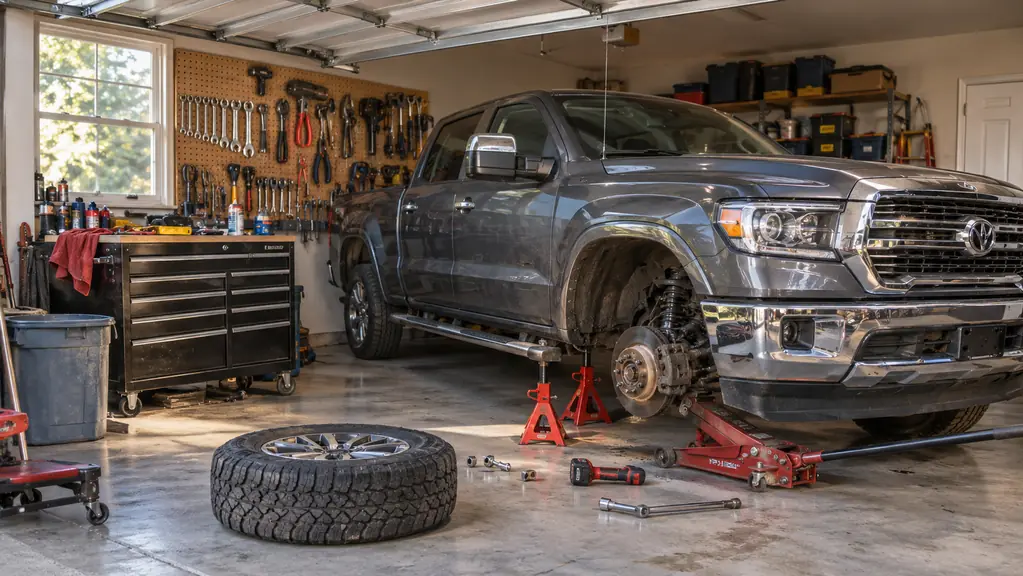
I'm Earl Dobbins. I spent 30 years fixing loaders and graders for a county road department, and I've been working on my own cars and trucks for longer than that. My garage is a detached two-car with a concrete floor, a rolling tool chest, a pegboard wall, and one shop light over the bench. It's nothing fancy. It's where the work gets done.
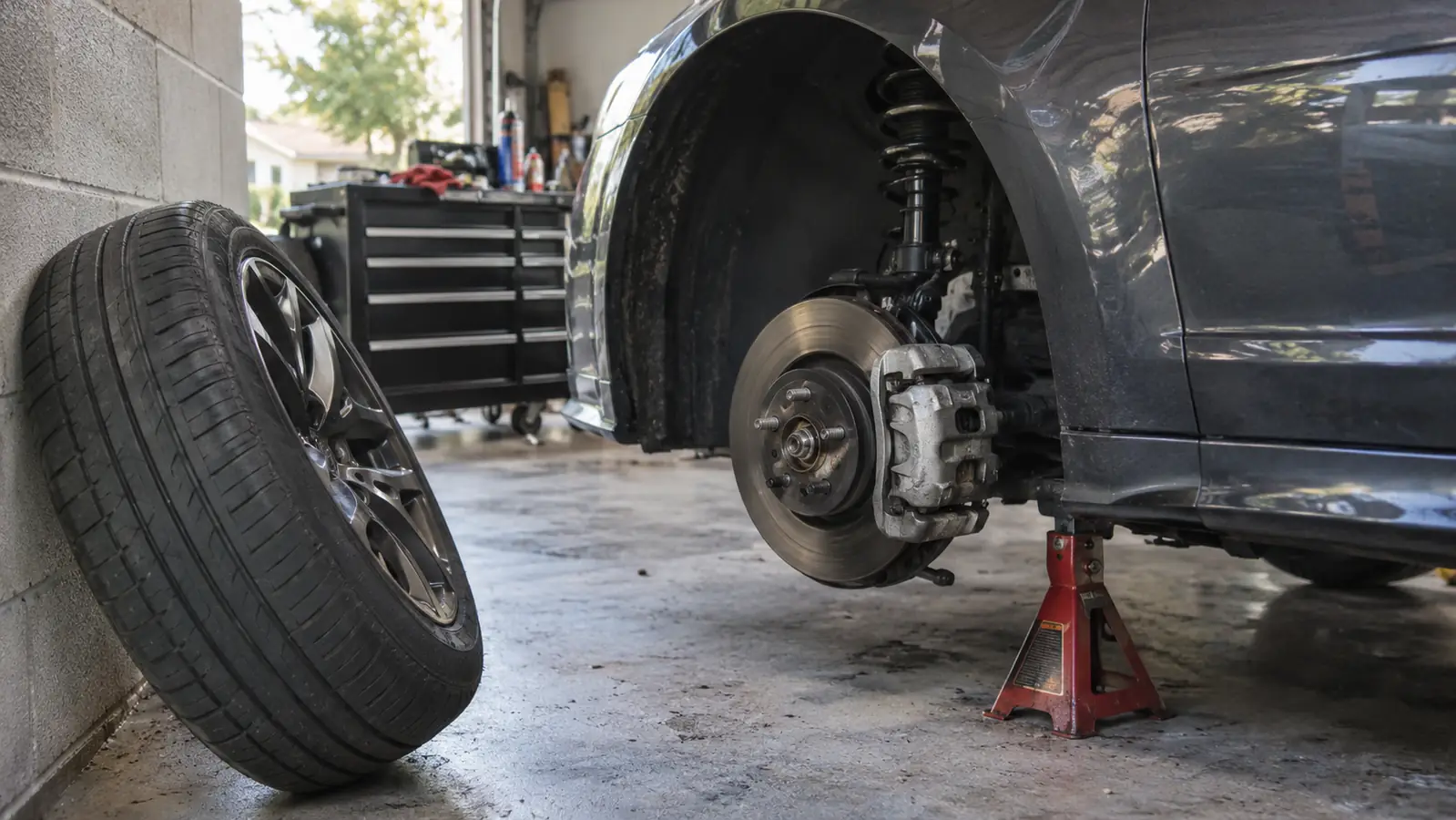
The diagnosis didn't take long. The last brake job on Travis's car had been done at a shop, and whoever was on the impact gun had been generous. The caliper bracket bolts were over-torqued, and one lug nut had stretched its stud. The rotor had a slight warp from uneven clamping. None of it was catastrophic yet. All of it was going to get worse, and all of it came from bolts that were tightened by feel instead of by the numbers a GEARWRENCH would have given them.
The stakes were simple. Travis had a Sunday drive ahead of him, and a stretched stud on the highway is not a conversation anyone wants to have. I've seen what over-torqued fasteners do to heavy equipment, and it's the same story on a car, just smaller parts and bigger consequences.
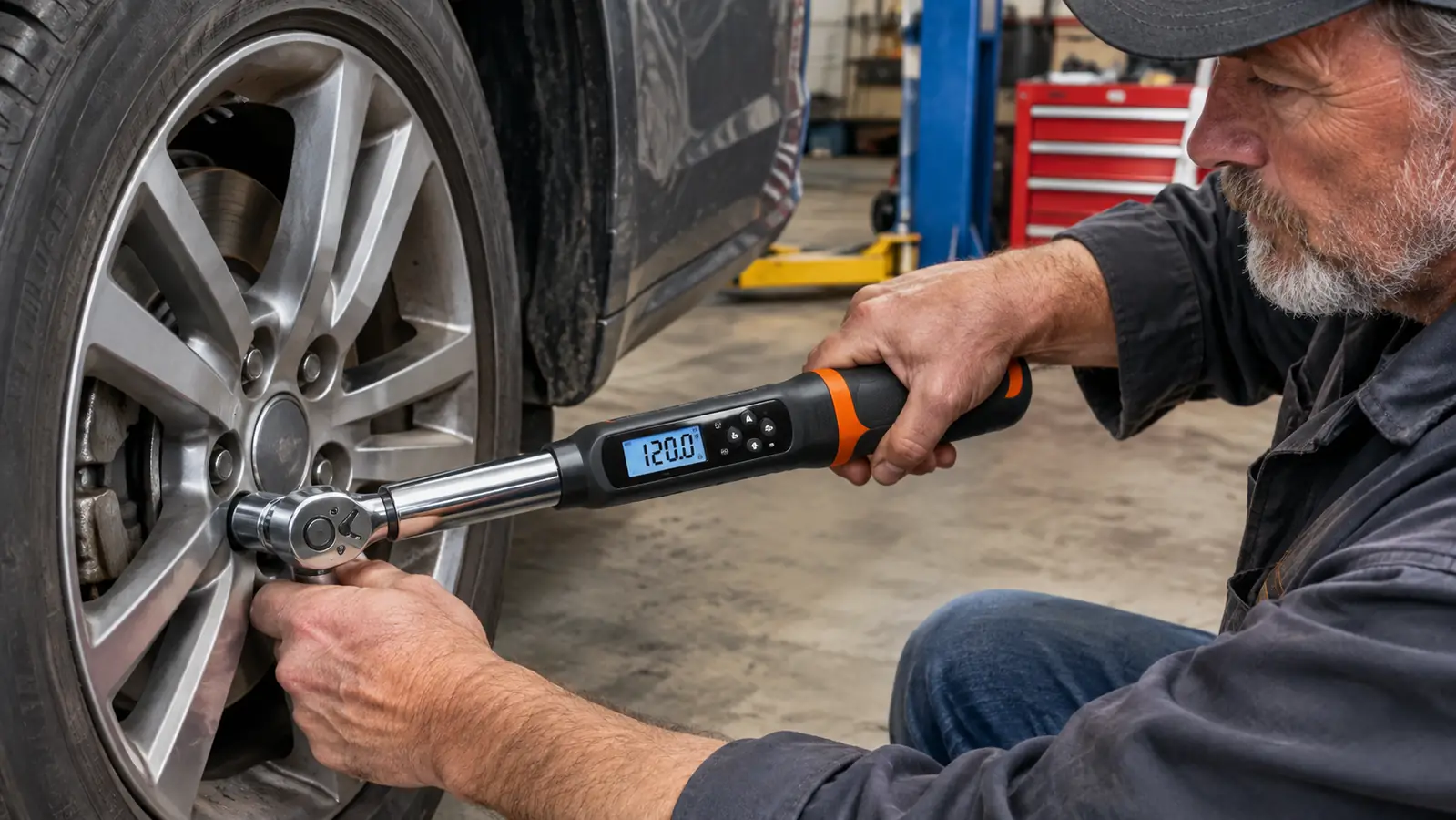
That's when the GEARWRENCH electronic torque wrench earned its keep. I've owned the 85077 for about three years now. It's a 1/2 inch drive electronic torque wrench with a 30 to 340 Nm range, and I use it for lug nuts, caliper bracket bolts, and spark plugs. It hangs on the pegboard between jobs, and on that Saturday I pulled it down and set the target torque for the caliper bolts.
The thing about an electronic torque wrench is that it talks to you. The readout switches between Nm, ft-lb, in-lb, Kgf-m, and Kgf-cm, so I set it in ft-lb. As you approach the target, the handle vibrates, a buzzer sounds, and a solid LED light comes on. Working alone in a garage, that matters. A click-type wrench depends on you feeling and hearing the click at the right moment. This one tells you, plainly, that you're there.
When that handle starts vibrating and the buzzer sounds, you're at the number. Not close. Not about right. At it.
Stop guessing at tight. Let the wrench tell you.
The GEARWRENCH 1/2 inch drive electronic torque wrench warns you as you approach target torque with a vibrating handle, buzzer, and LED light. Set the number, run the fastener, and let the tool do the math.
Amazon Check Today's Price on Amazon →The flex head got me out of a tight spot too. With the caliper bracket bolts tucked up behind the rotor, I needed the head to angle, and the 72-tooth ratchet with its 5 degree swing arc meant I didn't need much room to turn. The wrench is alloy steel with a polished finish, about 25.65 inches long and 3 pounds, so it's got leverage without being a beast to handle.
Here's what the accuracy numbers actually mean. The wrench is rated plus or minus 2 percent clockwise and plus or minus 3 percent counterclockwise, between 20 and 100 percent of its capability. For lug nuts and caliper bracket bolts, that's plenty. You're not chasing the last decimal. You're making sure the fastener is in the window where it's supposed to be, and that you're not the guy who stretched a stud.
One thing I'll say for the LED light: it's easy to see. Under the fender, in the shadow of the wheel well, with the shop light behind me, I could still see that light come on. The buzzer and the vibration are hard to miss, but the light is the one that tells you without taking your eyes off the fastener. That matters when you're working alone and you don't have a second pair of hands to watch the readout.
I swapped the warped rotor, put in fresh pads, torqued the caliper bracket bolts to spec, and put the wheel back on. I told Travis to bring it back after 100 miles so I could re-check the lug nuts. He did, two weeks later. None of them had moved. The job was done once, and it was done right.
Now, the honest part. The wrench needs two AA batteries, and they're not included. It's a measuring tool, not a breaker bar, so I don't use it to break a stubborn bolt loose. And I hang it back on the pegboard when I'm done, so it doesn't rattle around in a drawer. GEARWRENCH backs it with a 1 year limited warranty, and the calibration accuracy is warrantied for 90 days.
What I'd Tell You If We Were Sitting at My Kitchen Table
If you work on your own car, you need a torque wrench. That's not a sales pitch, it's just the truth. Every fastener on a modern vehicle has a number attached to it, and guessing at that number is how rotors warp, studs stretch, and brake jobs turn into do-overs. If you work alone, the electronic kind is worth the difference, because it doesn't rely on you catching a click at the right instant. Set the target, run the fastener, and let the tool tell you when you're there. Re-check your lug nuts after 100 miles. And never let an impact gun near a lug nut. You don't need the most expensive torque wrench on the shelf. You need one that's accurate, that you'll actually reach for, and that tells you the truth when you're working alone. That Saturday with Travis's car cost me a few hours and a rotor. It would have cost a lot more if that stud had let go on the highway. The GEARWRENCH paid for itself that morning, and it's been paying for itself ever since.
Do the job once. Do it right.
If you keep your own cars running, a torque wrench belongs on your pegboard. See today's price on the GEARWRENCH 85077 and torque your next job to spec.
Amazon Check Today's Price on Amazon →