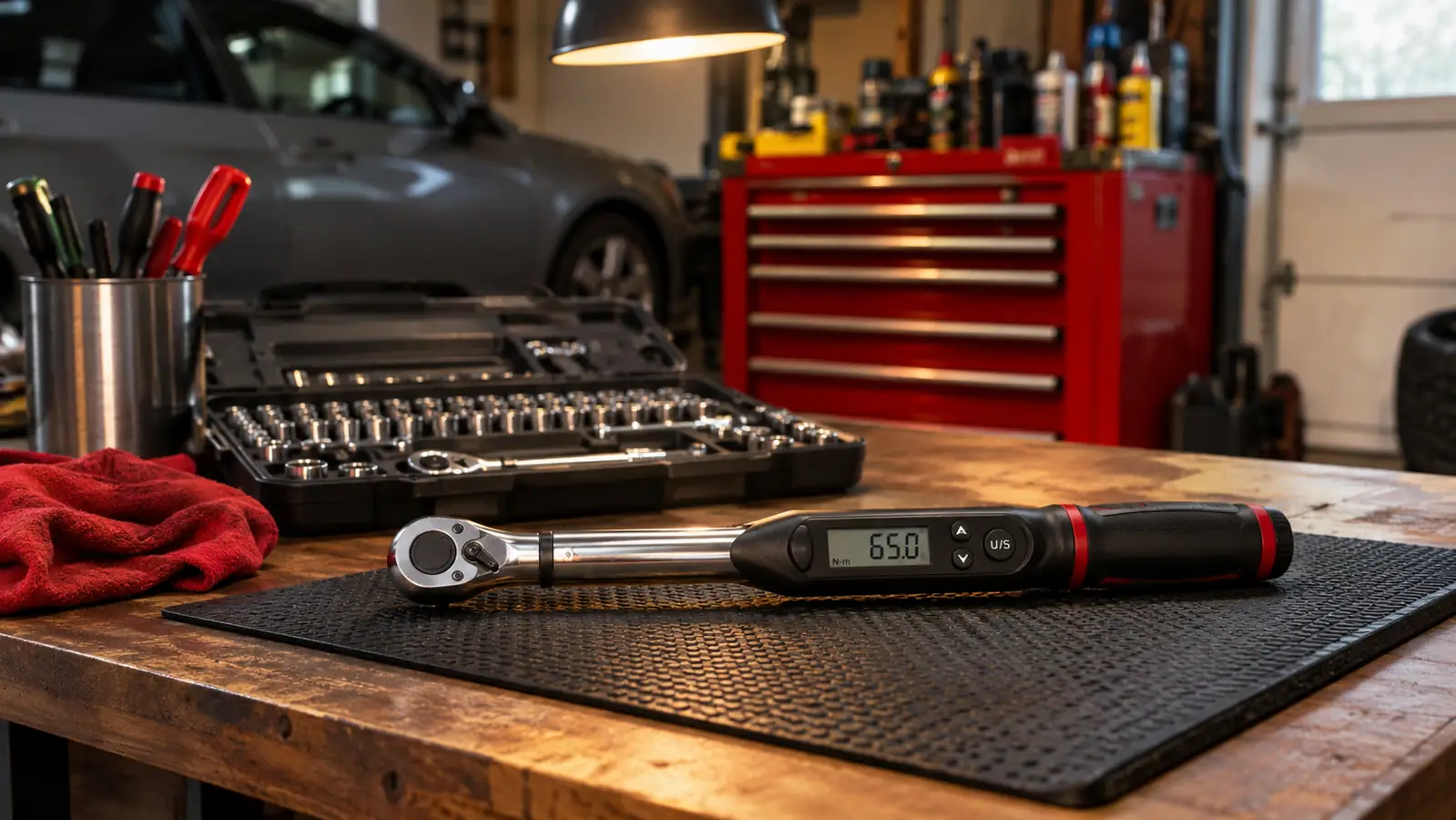
If you have ever tightened a lug nut by feel and then spent a Saturday afternoon fighting to get the wheel off, you already know why this comparison matters. I am Earl Dobbins, a retired heavy-equipment mechanic, and I have owned the GEARWRENCH 1/2 inch electronic torque wrench for about three years. I have also owned click-type torque wrenches for longer than I like to admit. Both styles get the job done. The question is which one you want in your hand when you are under your truck on jack stands with caliper bracket bolts staring back at you.
The short answer is that for most DIY work, the GEARWRENCH electronic torque wrench is the better tool. It tells you when you are close, it reads the same in bad light, and it has not given me a single accuracy problem in three years. But a click-type torque wrench is lighter, simpler, and easier to replace, and for a lot of home mechanics that is worth more than a digital readout. Neither choice is wrong. The right one depends on how you work and what you are torquing.
| GEARWRENCH 85077 | Click-type torque wrench | |
|---|---|---|
| Readout | Digital readout in Nm, ft-lb, in-lb, Kgf-m, or Kgf-cm | A scale on the handle that you line up by eye |
| Accuracy | +/-2% clockwise and +/-3% counterclockwise between 20% and 100% of capacity | Usually within a few percent when new, depending on the brand and how it is stored |
| Target warning | Vibrating handle, buzzer, and solid LED light as you approach the target | One audible click when you reach the setting |
| Weight and size | 3 pounds and 25.65 inches long | Typically lighter and slimmer |
| Power | Needs 2 AA batteries, not included | No batteries and nothing to power |
| Price | Costs more up front for the electronics and display | Usually the cheaper way to get an accurate torque reading |
| Material | Alloy steel with a polished finish | Varies by brand and price point |
| Warranty | 1 year limited warranty, calibration accuracy warrantied for 90 days | Varies by brand, often 1 year on mid-range models |
| Best for | Lug nuts, caliper bracket bolts, spark plugs, and tight spots where you cannot see the tool | Quick jobs where you want one simple tool that never needs batteries |
Where the GEARWRENCH Wins
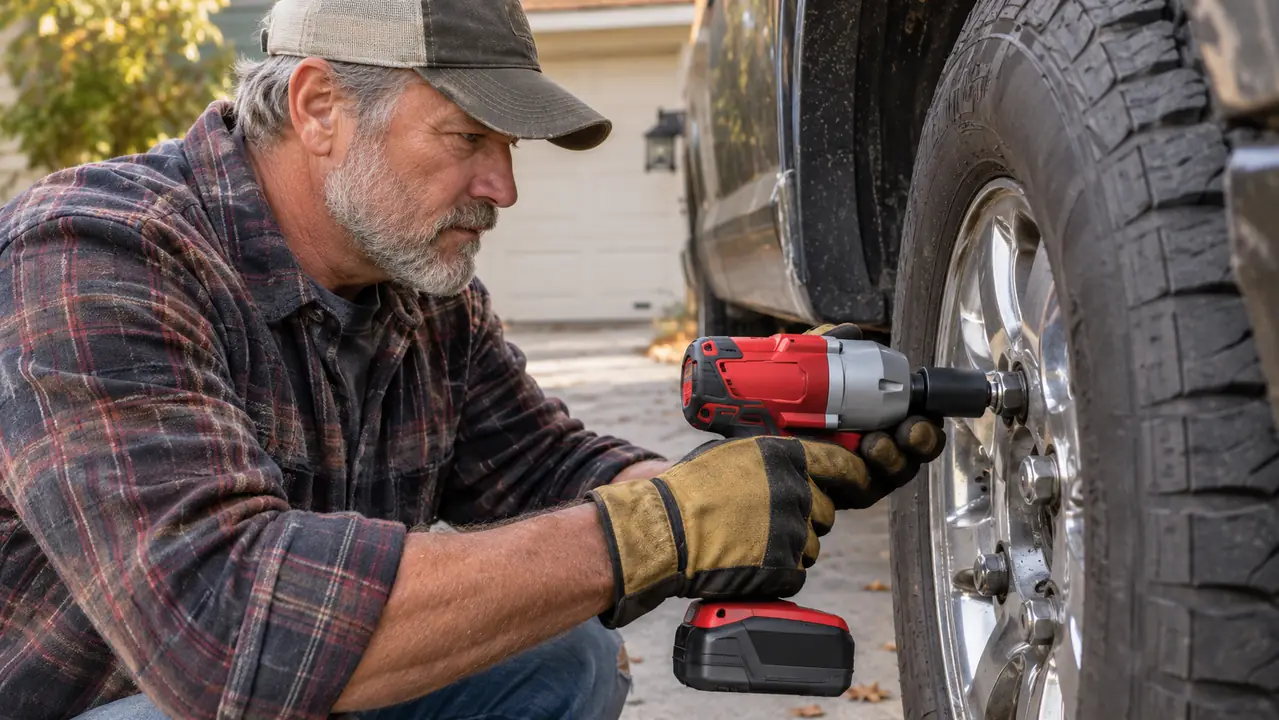
The biggest reason I reach for the GEARWRENCH is the Target Torque Alert. The handle vibrates, a buzzer sounds, and a solid LED light comes on as you get close to the target torque. When I am torquing caliper bracket bolts on Marlene's CR-V with the wheel well blocking half my view, I do not have to take my eyes off the socket. I feel the vibration and I know I am in the zone. With a click-type, you are listening for a click that can be hard to hear over a ratchet in a tight spot, and if your mind wanders for half a second you can blow right past the setting.
The accuracy spec is what sold me: plus or minus 2 percent clockwise and plus or minus 3 percent counterclockwise between 20 and 100 percent of the wrench's capability. The wrench is rated from 30 to 340 Nm, and that accuracy band covers every job I do at home. The readout can show Nm, ft-lb, in-lb, Kgf-m, or Kgf-cm, so when Travis brings his car over and the spec is in Newton-meters, I do not have to convert anything in my head. The 72-tooth ratchet with a 5 degree swing arc matters more than you would expect. On a lug nut in a tight wheel well, a short swing arc means I am not fighting the ratchet the whole time.
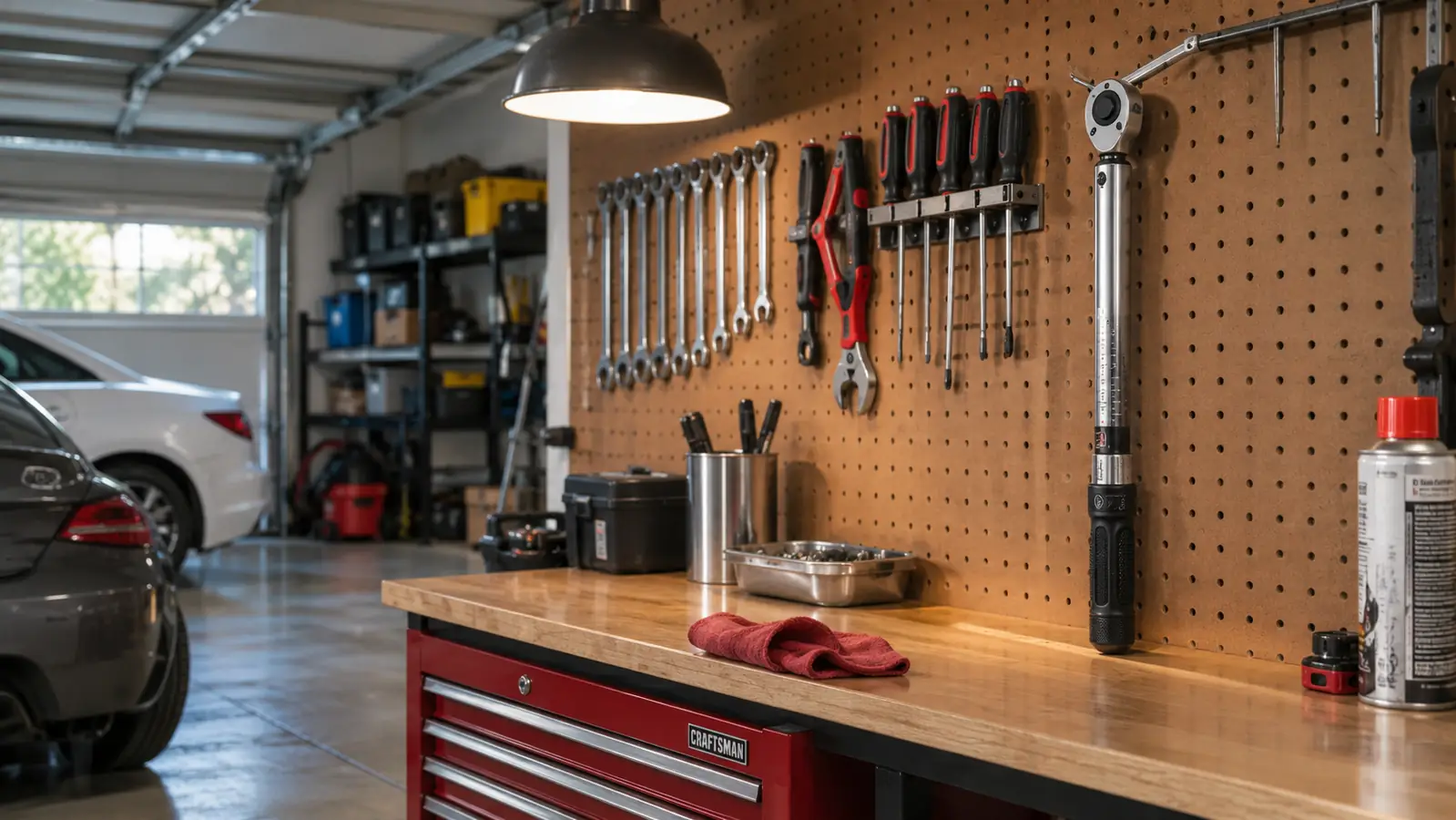
The flex head is another feature I did not think I needed until I used it. When you are torquing a fastener that sits at an angle, being able to hinge the head keeps the wrench square on the fastener instead of fighting the angle. The hang hole is a small thing, but it means the wrench hangs on the pegboard wall in my garage where I can grab it without digging through a drawer.
Where a Click-Type Wins
A click-type torque wrench is a simpler tool, and simple has real value in a garage. Mine has no batteries, no display, and nothing to break if I knock it off the bench. The GEARWRENCH weighs 3 pounds and runs on 2 AA batteries that are not included. That is not a dealbreaker, but it is one more thing to remember. A click-type is usually lighter and slimmer, which matters when you are working over your head or in a spot where every ounce counts. And if you drop a click-type, the usual result is a scuffed handle. Drop an electronic wrench and you are hoping the display survived.
A click-type also costs less up front, which matters if you are building your tool collection on a budget. There is also something to be said for a tool that never needs batteries. I have grabbed a dead electronic tool at the worst moment more than once in my career. With a click-type, you set the scale, you feel the click, and you are done. The tradeoff is that a click-type only tells you when you have arrived. It does not warn you that you are about to. If you are not listening for it, you can overshoot and not know until the click never comes.
A click-type also has a shorter learning curve. Hand it to someone who has never used a torque wrench and they will figure it out in about ten seconds: set the number, pull until it clicks. The GEARWRENCH takes a little more explaining, especially the first time someone sees the readout. That is not a reason to avoid it, but it is a real difference if you lend tools.
A click-type tells you when you have arrived. The GEARWRENCH tells you when you are about to.
The GEARWRENCH 85077 is the one I reach for first
After three years of lug nuts, caliper bracket bolts, and spark plugs, the GEARWRENCH 1/2 inch electronic torque wrench is still the first torque wrench I grab. It warns me before I get there, it reads in the units I need, and it has held its accuracy. Check today's price on Amazon and see if it belongs in your garage.
Amazon Check Today's Price on Amazon →Who Should Buy Which
Buy the GEARWRENCH electronic torque wrench if you do your own brakes, suspension, or any job where you are torquing fasteners in awkward spots. The vibrating handle and the buzzer are worth the extra cost the first time you use them in a dark wheel well. Buy it if you work in both inch and metric units, or if you want a torque wrench that is hard to misread. Buy it if you torque the same fasteners often enough that the digital readout saves you time every month.
Buy a click-type torque wrench if you want the simplest tool that does the job, if you are on a tight budget, or if your torque work is mostly lug nuts on one vehicle with a spec you have memorized. A click-type is also the better choice if you are hard on tools and do not want to worry about a display. And if you already own a click-type that you trust, there is no urgent reason to replace it. Use it until it gives you a reason not to.
There is also a middle path. If you already own a click-type you trust, keep it for the jobs where it shines and add the GEARWRENCH for the jobs where the warning matters. That is what I would do if I were starting over. The two tools do not compete with each other. They cover different weaknesses, and a good toolbox has room for both.
How I've Used Both
I have used the GEARWRENCH 85077 for about three years now. It lives in my rolling tool chest in the detached garage, and it comes out for lug nuts, caliper bracket bolts, spark plugs, and the occasional suspension job on my 2011 Ford F-150 or Marlene's 2016 Honda CR-V. The click-type wrenches I have owned over the years were the same way, one for 1/2 inch drive and one for 3/8 inch, and they did their job without complaint.
The difference shows up in how the two tools behave. With a click-type, you set the collar to the number, and when the fastener reaches the setting the handle gives a sharp click and goes slack. It is a good system, and it has torqued millions of fasteners. But it asks you to trust a sound you can miss. The GEARWRENCH gives you three signals at once: a vibrating handle, a buzzer, and a solid LED light, and it starts warning you before you get to the target, not at the moment you blow past it.
I have also checked one against the other. When I torque a lug nut to spec with the GEARWRENCH and then run it with a click-type set to the same number, the click-type clicks at almost the same spot every time. That tells me the electronic wrench is reading true. It has held that accuracy for three years, which matters to a guy who spent 30 years trusting his hands and his ears.
What About Calibration and Care
Calibration is the thing everybody worries about with torque wrenches, and for good reason. The GEARWRENCH carries a 1 year limited warranty, with calibration accuracy warrantied for 90 days. That is not a lifetime guarantee, but it covers the period when a defect would show up. In three years I have not needed it.
For care, I follow the same habits with both styles. I store a click-type at its lowest setting so the spring stays relaxed. The GEARWRENCH I keep out of the weather, and I check the batteries every spring. A torque wrench is a measuring tool. Treat it with the same respect you would give a good micrometer and it will stay accurate for years.
The Bottom Line
For my money, the GEARWRENCH electronic torque wrench earns its place in the box. I have used it for about three years on lug nuts, caliper bracket bolts, and spark plugs, and it has been accurate every time I have checked it against a click-type. The Target Torque Alert is not a gimmick. It changes how you work, because you can keep your eyes on the fastener instead of the tool, and that matters more the older I get and the less I trust my ears to catch a click.
But I am not going to tell you that a click-type is a mistake, because it is not. If you already own one you trust, keep using it. If you are buying your first torque wrench and the budget is tight, a click-type will get you through every job I have described here. The GEARWRENCH is the upgrade you buy when you are tired of craning your neck to read a scale or listening for a click you can barely hear. For DIY work, that day comes sooner than you expect.
Here is the honest version. If most of your torque work is lug nuts and you already own a click-type that you trust, you do not need to buy anything today. But if you are tired of guessing whether you felt the click, or you are about to do your first brake job, the GEARWRENCH electronic torque wrench is the tool I would put in your hand. It has earned its spot in my garage, and I do not say that about every tool I own.
A torque wrench you can trust without looking at it
The GEARWRENCH 1/2 inch electronic torque wrench has been in my garage for three years and it has never let me down. If you are done guessing at torque, check today's price on Amazon and see if it belongs on your pegboard.
Amazon Check Today's Price on Amazon →