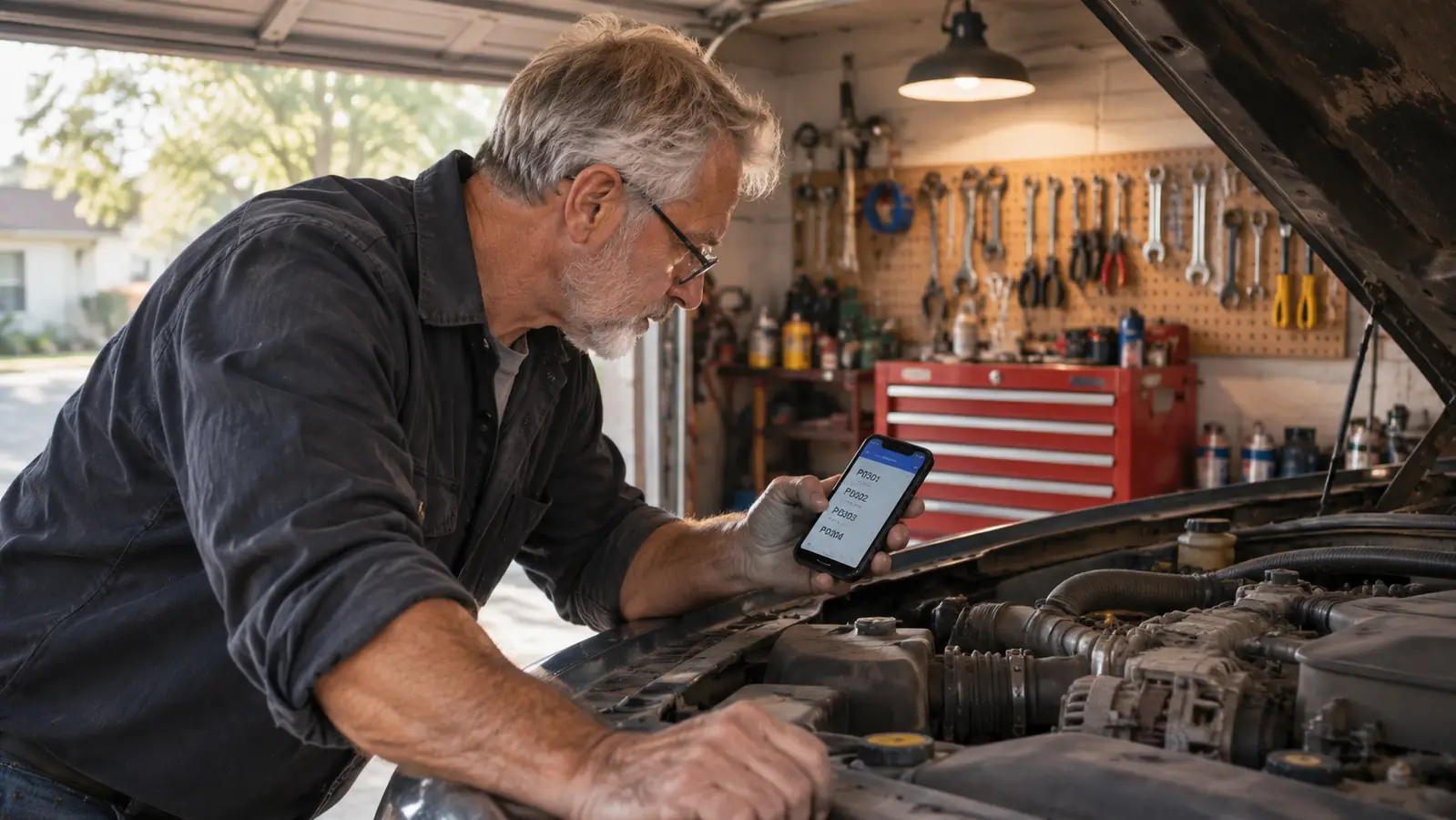
The check-engine light came on in my 2011 F-150 on a Tuesday afternoon, about two years ago now. I had just pulled into the driveway and there it was, that little amber glow I have spent thirty years telling other people not to panic over. My first thought was the oxygen sensor, because that is usually the first thing to go on a truck that has been driven hard. My second thought was that I did not want to drive forty minutes to a shop and pay a diagnostic fee for a code I could look up myself. That is why I bought the BlueDriver.
I will tell you straight: I did not expect much. I have used shop scanners that cost more than my first car, and I have used cheap code readers that just give you a number and a shrug. The BlueDriver sits somewhere in between, and that is exactly where most home mechanics live. It is a Bluetooth sensor that plugs into the OBD2 port under the dash, and everything shows up in an app on your phone. There is no screen on the tool itself. That sounds like a limitation until you use it, because the phone screen is bigger and easier to read than any scanner screen I have squinted at.
The Quick Verdict
The best phone-first code reader I have used in two years of owning one. It reads and clears codes, shows live data, and checks smog readiness, as long as you are comfortable letting your phone do the talking.
Amazon Check Today's Price →Tired of guessing what that light means?
The BlueDriver plugs into your OBD2 port and puts the codes, live data, freeze frames, and smog readiness on your phone. No subscription, no wires, and a 180-day money back guarantee.
Amazon Check Today's Price on Amazon →How I've Used It
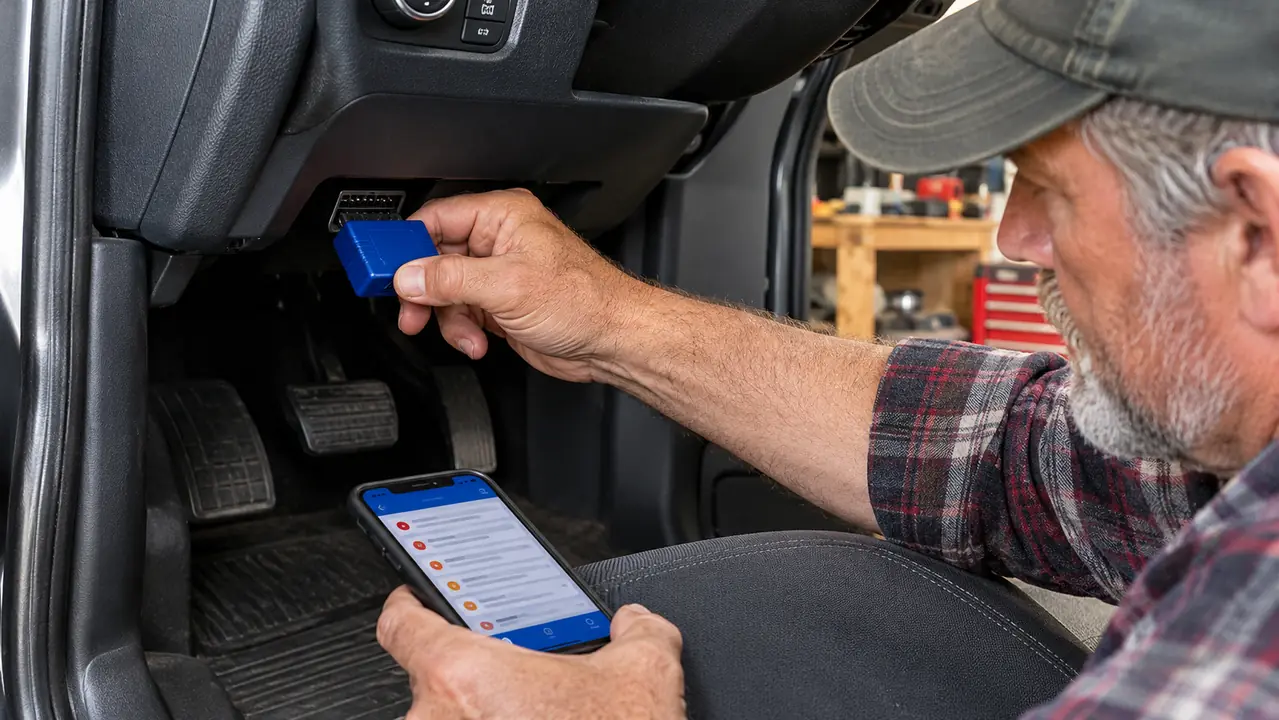
The day it arrived, I plugged it into the port under the F-150 dash, fired up the app on my phone, and paired it. It took me two tries to get the Bluetooth to connect, which I will come back to, because it is the one thing nobody told me about. Once it connected, the app pulled the code that was setting off the check-engine light and pointed me at the oxygen sensor circuit. I checked the wiring, replaced the sensor that weekend, cleared the code, and the light stayed off.
Since then, the BlueDriver has earned its spot in the glovebox. When Marlene's CR-V threw a code for the evaporative system, it turned out to be a loose gas cap. I tightened it, cleared the code, and that was the whole repair. When Travis brought his car over with a misfire, I used the live data to watch the misfire counter while the engine idled, which told me which cylinder to look at first. That is the difference between guessing and knowing.
I keep the BlueDriver in the F-150 glovebox, so it is always with the truck. That matters more than you might think. A check-engine light does not wait until you are standing next to your tool chest, and having the scanner in the truck means I can pull the code in the parking lot instead of driving home first and then driving back out.
What Setup Looks Like
The box is simple: the scanner and access to the BlueDriver app for iOS or Android. You download the app, plug the scanner into the OBD2 port under the dash, and pair it over Bluetooth. The app walks you through the rest. I had the F-150 connected and reading codes within ten minutes of opening the box, not counting the two tries it took to pair.
One thing I will say about the app: it does not get in the way. The codes come up fast, and the layout makes sense when you are lying on your back in the driveway with a phone in one hand and a flashlight in the other. You can get the gist of the problem before you even roll out from under the truck.
What Nobody Tells You Before You Buy
Here is the honest part, and it is the part most reviews skip. The BlueDriver is a phone tool. The scanner itself has no screen. It is a Bluetooth sensor that plugs into the OBD2 port and sends data to the app. That means your phone is the interface, and if your phone is dead, or you left it in the house, or you are using it to follow along with a video while you work, the BlueDriver just sits there. It is a tool that assumes you always have your phone within reach, and these days most of us do, but it is worth knowing before you buy.
The second thing nobody tells you is that the app is the real product. The scanner is just the messenger. The app is where you read codes, watch live data, look at freeze frames, and check smog readiness. If you are not comfortable with phone apps, this is not the tool for you. That is not a knock on the BlueDriver, it is just the truth about how it works.
The third thing is Bluetooth. It connects wirelessly, which is great, but pairing can take a couple of tries, especially in a driveway where the phone is also trying to talk to a garage door opener or a neighbor's router. It is a minor annoyance, not a dealbreaker, but I would rather tell you now than have you think something is broken the first time you use it.
The last thing, and this is the one I wish every review said in big letters: a code points to a circuit, not always to a part. When the BlueDriver said oxygen sensor circuit, it meant the sensor was the likely suspect, not a guarantee. I still checked the wiring and the connector before I spent money on a part. A code reader, even a good one, does not replace the judgment part of the job. It just takes the guesswork out of where to start looking.
What It Reads and What It Won't Tell You
The BlueDriver reads and clears more codes than a basic code reader, and it covers the systems that matter on a modern vehicle. The title says it plainly: ABS, SRS, and TPMS. That means it will talk to the antilock brake system, the airbag system, and the tire pressure monitors, not just the engine computer. For a home mechanic, that is the difference between a tool that handles the check-engine light and a tool that handles the other lights on the dash too.
It also does things that used to require a much more expensive scanner. You can watch live data as you drive, which is how I watched the misfire counter on Travis's car. You can pull freeze frames, which is a snapshot of what the engine was doing the moment the code set. You can check smog readiness and analyze Mode 6 test results, which are the numbers behind the readiness monitors. None of that requires a subscription, and the title says that plainly too.
The limit is in the fine print: it works with gas vehicles made in 1996 or newer, plus select light-duty trucks. If you drive a heavy-duty truck or a diesel, you need to check the fit before you buy. I have a buddy with a diesel work truck, and the BlueDriver is not the tool for him. It is also not a substitute for a shop-level scanner with manufacturer software. It will not run the deep tests that a dealer tool runs. It gives you the data, and you still have to interpret it.
Where It Falls Short
I have owned the BlueDriver for about two years, and I have a short list of complaints. The first is the phone dependency, which I already covered. The second is that the app has a learning curve. Mode 6 and freeze frames are jargon-heavy, and the app does not hold your hand. If you just want to know why the light is on, you will be fine. If you want to dig into the data, plan on spending an evening learning what the terms mean.
The third is Bluetooth pairing. It is not a one-and-done thing. On the F-150, the connection drops if the phone goes to sleep, and I have to reopen the app to wake it up. It takes ten seconds, but it is the kind of thing that will annoy you if you are used to a tool that just works. The fourth is that the scanner draws power from the vehicle, which is fine, but long sessions with the key on will drain the battery if you are not careful. I keep a charger in the garage for that.
None of that changes my recommendation, but it is the difference between a review that tells you the truth and a review that makes a tool sound perfect. The BlueDriver is not perfect. It is very good at what it does, and what it does is give a home mechanic the same information a shop would charge you to look up.
The BlueDriver did not fix my truck. It pointed me to the oxygen sensor, and that saved me a shop visit.
Why the Smog Readiness Check Matters
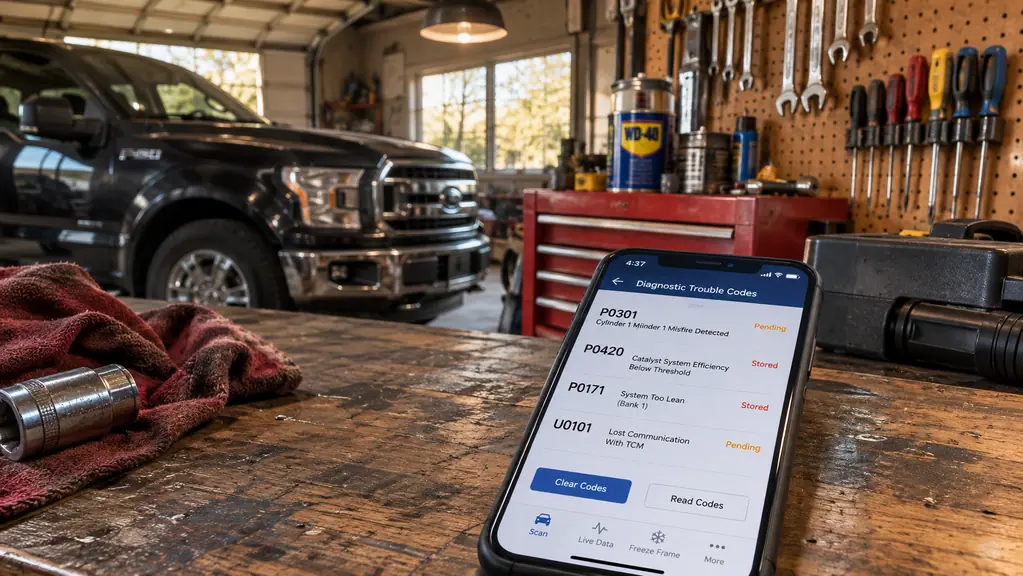
If you live in a state with emissions testing, this is the feature that will make the BlueDriver worth owning all by itself. Before I had it, I would drive to the test station and hope the monitors were set. If they were not, I would fail, pay the fee, and have to drive around for a week to reset them. Now I check the smog readiness monitors in the app before I leave the house. When it says ready, I go. When it says not ready, I know I need to drive the truck through a few warm-up cycles first.
That is the kind of thing you do not know you need until you have been burned by it once. The BlueDriver does not just read codes. It gives you the information you need to avoid wasting a Saturday.
The 180-Day Guarantee and What It Tells You
The BlueDriver comes with a 180-day, 100 percent money back guarantee. I like that, and not just because it protects the buyer. A company that offers a no-risk guarantee on a tool like this is telling you they expect it to work. It also tells you something else: you should test it hard in the first month. Plug it in, read every code you can, check the smog readiness, watch the live data. If it does not work with your phone, or you do not like the app, send it back. That is what the guarantee is for.
I have never had to use mine, but I have recommended the BlueDriver to enough people that I have seen the guarantee work for others. One neighbor bought one, could not get it to pair with his old phone, and got his money back without a fight. That is the kind of company behavior that makes me comfortable recommending a tool.
What I Liked
- Reads and clears more codes than a basic code reader
- Live data, freeze frames, smog readiness, and Mode 6 results in the app
- Covers ABS, SRS, and TPMS, not just the engine computer
- Works with gas vehicles 1996 and newer, plus select light-duty trucks
- No subscription, no wires, and a 180-day money back guarantee
Where It Falls Short
- No screen on the tool; everything runs through your phone
- Bluetooth pairing can take a couple of tries and can drop if the phone sleeps
- Codes point to a circuit, not always the exact part
- Not for heavy-duty trucks or diesels; check the fit first
- Mode 6 and freeze frames have a learning curve
Who This Is For
Buy the BlueDriver if you are a home mechanic who keeps a gas vehicle from 1996 or newer, owns a smartphone, and wants to know what a code means before you decide whether to fix it yourself or call a shop. It is for the person who would rather spend an evening in the garage with a tool than a morning in a waiting room. It is for people who want the same information a shop uses, without paying a diagnostic fee to get it.
It is also for people who live in emissions-testing states, because the smog readiness check alone is worth the price of admission. And it is for people who want a tool that grows with them, because live data and Mode 6 are there when you are ready for them.
Who Should Skip It
Skip the BlueDriver if you want a scanner with its own screen, because this is a phone-first tool and that will never change. Skip it if you have no patience for phone apps, because the app is the whole experience. Skip it if you drive a heavy-duty truck or a diesel, because the fit list says select light-duty trucks, and you need a tool that covers your vehicle. And skip it if you just want to know the code and have someone else do the work, because a code reader does not fix anything. It only tells you where to look.
There is no shame in any of those. A shop exists for a reason, and sometimes the best tool is a phone call. But if you are the kind of person who reads this and thinks, that sounds like me, the BlueDriver is probably the right tool for your garage.
The honest version: it works, if you know what it is.
A phone-first code reader that reads and clears codes, shows live data, checks smog readiness, and covers ABS, SRS, and TPMS on gas vehicles 1996 and newer. No subscription. 180-day money back guarantee.
Amazon Check Today's Price on Amazon →